Would you take a Toyota Corolla off-road in the woods? Or use a Ford F-150 to navigate tight downtown streets filled with pedestrians and narrow turns? The same principle applies when selecting the right ambulance. The right vehicle depends on the environment, the mission, and the demands of the call.
Every EMS response is different. Urban environments, long-distance transport, and high-acuity care all require specific capabilities. For paramedics and fleet managers, the goal is not to rely on a single model. It is to build an ambulance fleet strategy that ensures the right vehicle is always available for the situation.
For over 65 years, every vehicle we have designed has had a clear purpose. Together, they form a complete lineup that supports patient care, crew safety, and operational efficiency.
Type I, Type II, and Type III ambulances: What’s the difference?
Before getting into the different models, it’s helpful to first understand the three main types of ambulances. Each one is built on a different chassis and has its own strengths depending on how it will be used.
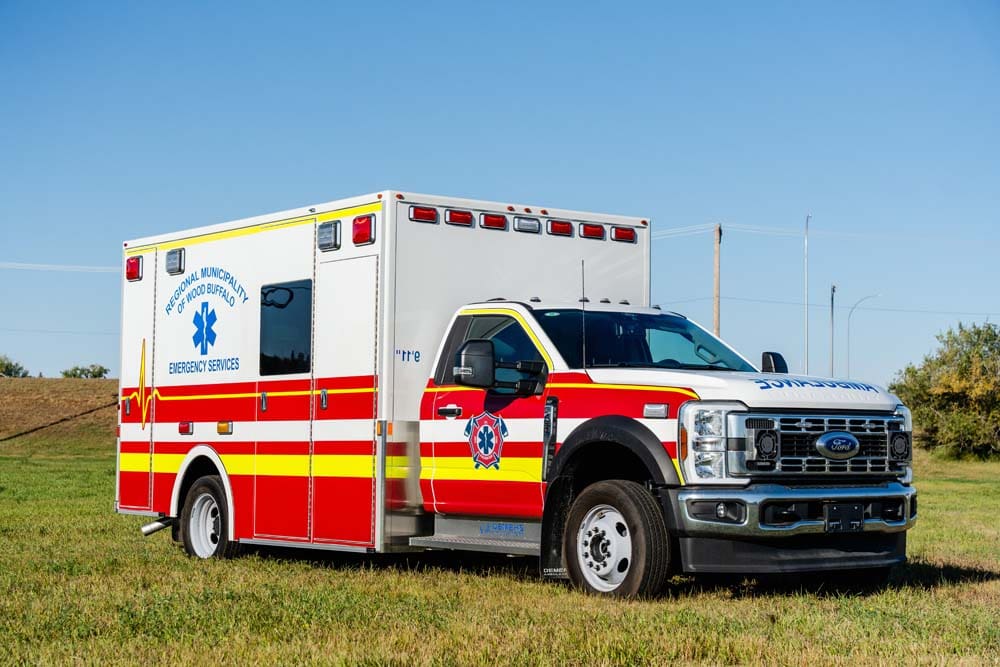
Type I ambulances are built on a truck chassis with a separate modular patient compartment. They are built for durability, with greater payload capacity and are capable of handling various terrain. These units are commonly chosen for advanced life support and more demanding operating conditions.
Type II ambulances are built on a van chassis, making them more compact and easier to handle, especially in tight urban environments. While they have less interior space, they are efficient and a great fit for patient transport and lower-acuity calls.
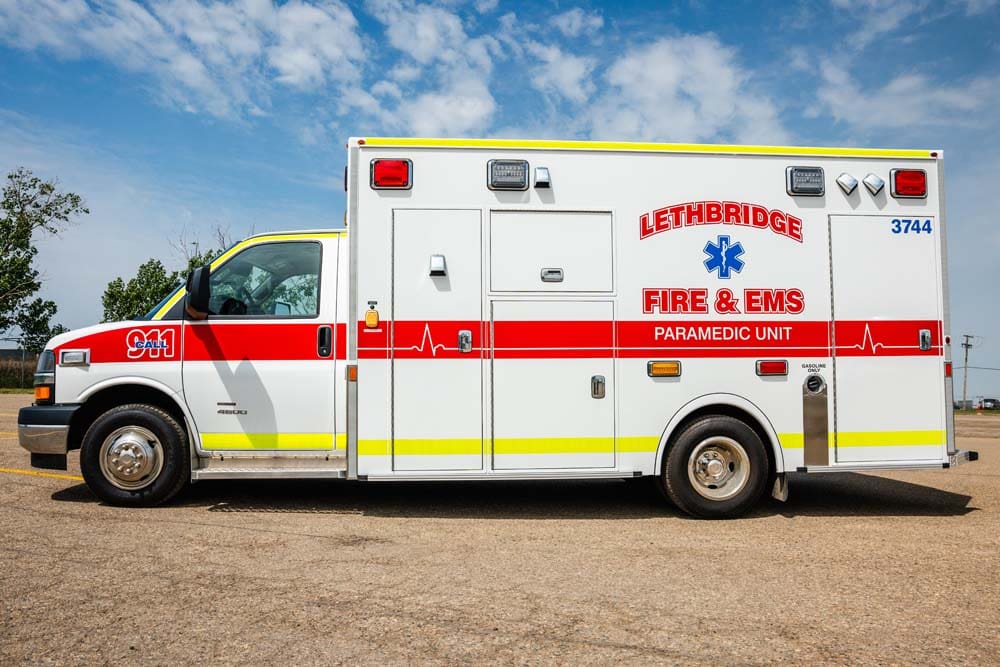
Type III ambulances are built on a cutaway van chassis with a connected cab and patient compartment. This setup offers a solid balance of interior space, accessibility, and ease of handling, while also making it easier for the driver and patient care team to communicate.
Each type has its own role to play, and no single option fits every situation. The most effective fleets usually include a mix of all three, allowing operators to match the right vehicle to the job and respond more efficiently to different types of calls.
Full-size units for advanced care and high demand
Full-size ambulances are a key part of any service managing higher call volumes or more complex care. When operations get busy or require advanced equipment, having the right amount of space and capability becomes essential.
The MX 170, a Type III model, offers a spacious interior that supports efficient workflows and keeps equipment easily accessible. It is designed to give paramedics the room they need to work comfortably while delivering high-quality care.
The MXP 170, a Type I model, builds on this with added durability and flexibility. Its truck-based platform makes it a strong choice for more demanding conditions and higher-acuity calls where reliability is critical.
Versatile units for everyday operations
A large share of EMS calls requires a balance between performance and efficiency, which is where mid-size ambulances really stand out.
The MX 164, a Type III model, is widely recognized as a dependable workhorse. With thousands of units in service, it has built a strong reputation for reliability, safety, and ergonomic design, all while offering flexible layout options to suit different operational needs.
For services operating in Ontario, the MX 164 Ontario variant builds on that same proven platform with a layout specifically designed around provincial requirements. Developed with direct input from Ontario paramedics, it reflects local workflows, equipment standards, and Ministry of Health specifications to better support day-to-day operations.
These models can handle a wide range of everyday calls such as routine 911 response, interfacility transfers, and general patient transport. In many services, the same unit can be used across different shifts and call types, making it a practical and efficient choice. This flexibility allows teams to adapt quickly to changing demands while keeping operations consistent and reliable.
Compact and specialized units for targeted response
Some situations call for smaller, more agile vehicles or more specialized setups.
The MX 152 has a more compact footprint while still maintaining the safety and ergonomic features crews rely on. They are easier to maneuver in tighter urban areas and can help improve response times when access is more limited.
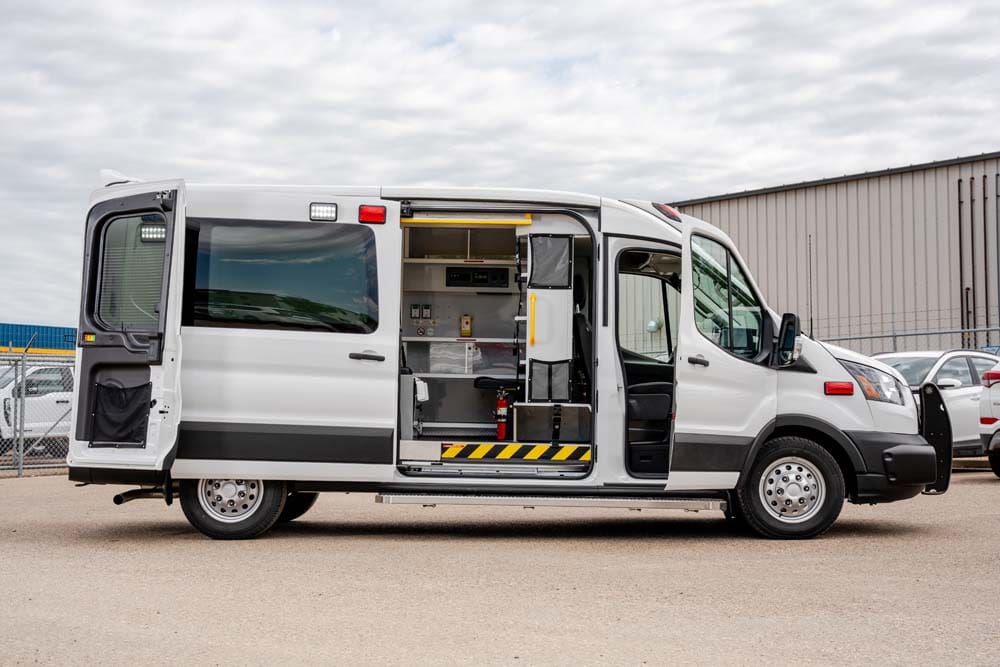
The TS, a Type II ambulance, provides a van-based option that works well for patient transfers, community paramedicine programs, and lower-acuity calls. It offers practical interior space with efficient day-to-day operation for more specific needs.
The MXP 150 is built on a pickup chassis and offers greater cab comfort, smoother handling, and a clear separation between the driver and care areas. Extra legroom and an ergonomic interior help reduce driver fatigue, while improved suspension enhances comfort for both patients and paramedics.
These types of units complement larger ambulances by covering targeted use cases and helping services make the most of their fleet overall.
Choosing the right ambulance lineup is not just about specifications. It is about understanding your reality on the ground and aligning your fleet with the demands your teams face every day.
At Demers Ambulances, we work closely with paramedics and fleet managers to help define the right mix of vehicles for their operations. Whether you are expanding, renewing, or optimizing your fleet, our team is here to guide you toward a strategy that supports performance, safety, and long-term value.
Because the right fleet is not built by chance. It is built with the right partner.