An accident happens. An ambulance is damaged, and the fleet manager immediately faces two questions: Can it remain safely in service, and how can it become fully operational again? Beyond the repair itself, a damaged ambulance can mean one less unit available and added pressure on daily operations.
That is why Demers Customer Care recommends reaching out as soon as an accident occurs. The first objective is to answer the most important question—the one that will determine what happens next: What assessment and repairs are needed before the ambulance can safely return to service?
“My first advice to a fleet manager is to call us as soon as an accident happens. By getting involved early, we can help them understand the situation and guide them through the next steps.”
— Robin Giard, Service and Customer Experience Manager
An ambulance is not assessed like a conventional vehicle
Photos of the damage, serial number, and mileage: a few key pieces of information can help start the assessment. Depending on the situation, the team can determine whether a physical inspection is required, identify the parts needed, and work with the insurer when they are involved.
An impact to the module wall, for example, may have affected structural elements inside the module, cabinetry, or certain electrical components. In some cases, the full extent of the damage only becomes visible during disassembly, requiring ongoing communication with the insurer.
“The expertise is also knowing what could be behind the area where the vehicle was hit. Some damage is obvious; other damage only becomes visible during disassembly. You need to know what to look for and make sure nothing is overlooked.”
— Robin Giard, Service and Customer Experience Manager
This expertise also helps ensure that the specific requirements of an ambulance are considered. When a repair affects the structure, it must follow the vehicle’s original plans, manufacturing methods, applicable standards, and certifications.
The objective is to restore the ambulance to a condition consistent with its original design and intended use, with the safety of the paramedics and patients who rely on it in mind.
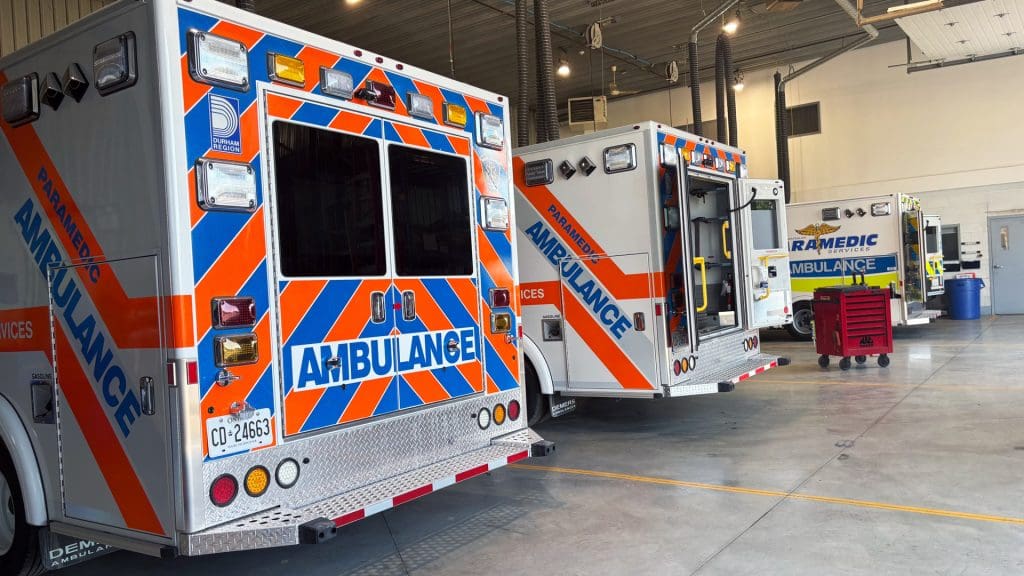
Repair, replace, or temporarily keep the vehicle in service?
In some cases, repair is the appropriate solution. In others, when the chassis has sustained significant damage, but the module remains viable, an ambulance remount may be considered. And when the vehicle’s condition, age, or extent of damage makes repair impractical, replacement may become necessary.
When a vehicle is declared a total loss and operations are affected, Demers may, when circumstances allow, review its production schedule to help accelerate replacement.
Demers’ support therefore also involves helping fleet managers navigate these different possibilities and working across teams to find the solution that best addresses their operational reality.
An accident does not automatically mean an ambulance must remain out of service until repairs are complete. When it can still operate safely, the team may prepare parts in advance and schedule a shorter intervention. For example, if a damaged component remains functional, its replacement can be ordered, prepared, and painted before the vehicle is taken out of service for installation.
“When the situation allows it, we look for a solution that avoids taking the vehicle off the road unnecessarily. If we can prepare what we need before bringing it in for service, that’s a concrete way to reduce the impact on the customer’s operations.”
— Robin Giard, Service and Customer Experience Manager
A partner in protecting your fleet’s operational continuity
Demers’ role goes beyond completing a repair. It is about understanding the damage, determining what it means for an ambulance and finding the most appropriate solution while considering vehicle safety and the operational reality of the paramedic service. Ultimately, the goal is to help customers keep their fleets ready to support their mission, with the safety of paramedics and patients always at the forefront.
And that solution does not necessarily involve having the repair completed at Demers. Robin explains that when the damage does not affect the structure or elements related to the ambulance warranty, the team may direct the customer to have the work completed elsewhere if that option better meets their needs.
When an ambulance is involved in an accident, contact the Demers team as early as possible. The sooner the situation is understood, the sooner the right path forward can be identified to minimize the impact on the fleet.