View Our History Timeline
1800s
The Beginning

The first cart modified by Gustave Demers.
In the late 1800s, Gustave Demers, a skilled cabinetmaker and entrepreneur in the Beloeil region near Montreal, began building horse-drawn carts, hearses, and funeral wagons, laying the foundation for a legacy of purposeful vehicle craftsmanship.
1960
Establishing Demers Ambulances
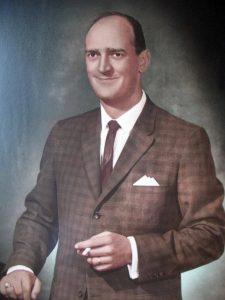
Paul Demers in 1950.
In 1960, Paul Demers, Gustave’s grandson and a trained funeral director, recognized the growing need for dedicated patient transport and took action by launching an ambulance service and manufacturing his own vehicles when no supplier could meet his standards, with help from family and friends.
1960
Our First Ambulance
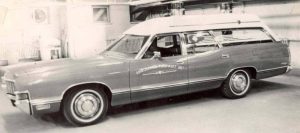
The first Demers ambulance resembled a hearse.
The ambulance was custom-built with an extended chassis and raised roof to create more interior space, at a time when ambulances were strictly for transport. Patient care during transit, along with the paramedic profession, had not yet emerged.
1967
A Permanent Home
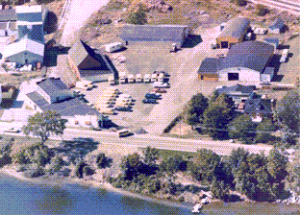
The Demers factory in 1976.
As the business continued to grow, we relocated several times before establishing a permanent home in 1976 at 28 Richelieu Street in Beloeil. Located in Quebec, Canada, generations of teams have since expanded the facility to increase production capacity and keep pace with rising demand.
1970
The First Van Ambulance
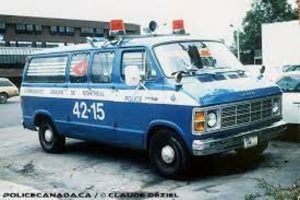
A dual-purpose ambulance for the City of Montreal.
We designed our first van-based ambulance to deliver a more efficient, maneuverable emergency vehicle. Its immediate success, driven by lower operating costs and real-world performance, marked the start of a new phase of growth for our company, including securing our first major contract with the City of Montreal.
1976
International Growth
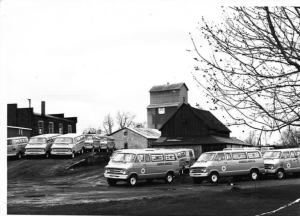
Some of the 200 ambulances ordered for Venezuela.
During a visit to Montreal, a representative from Venezuela’s Ministry of Health took notice of our vehicles, leading to our first Latin American order for 200 ambulances just months later. That milestone marked the beginning of sustained international demand, followed in 1978 by a 100-unit order from the City of Alexandria. Today, Demers ambulances are in service in more than 40 countries worldwide.
1984
Diversification
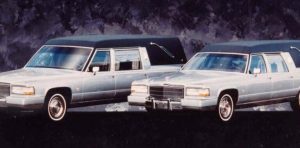
Two examples of our 1980s funeral hearses.
As order volumes fluctuated, we adapted by expanding into limousine and hearse manufacturing. This helped us establish an early presence in the U.S. and supported a broader, full-service offering for customers.
1987
Crestline Partnership
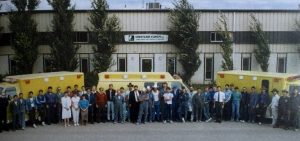
The Crestline team with 3 ambulances built for Quebec.
An agreement was established with Crestline Coach Ltd. to distribute its ambulances, building on a long-standing relationship rooted in trust and collaboration that would continue for decades.
1990
A Strategic Shift
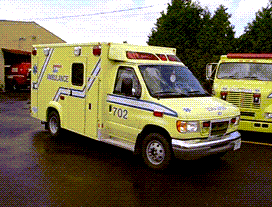
A Demers ambulance from 1990.
As market conditions shifted, we decided to exit our U.S. dealership, limousine, and hearse operations and focus exclusively on building ambulances. During this period, leadership transitioned to the next generation, with Paul Demers passing the company to his four children: Sylvain, Guylaine, Yves, and Robin. Today, Robin Demers continues to play an active role in the business.
1991
Advancing Safety Standards
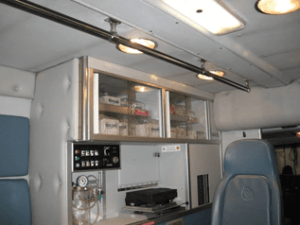
Our aluminum medical cabinetry from this period.
As ambulance manufacturing faced limited regulation, we took an active role in raising safety and quality standards by working with industry and health authorities to help strengthen expectations for how ambulances are built. At the same time, we advanced emergency vehicle design by replacing traditional wood and steel cabinetry with aluminum, improving durability, lowering the vehicle’s center of gravity, and enhancing overall stability and safety.
1992
Debuting The Mirage CX
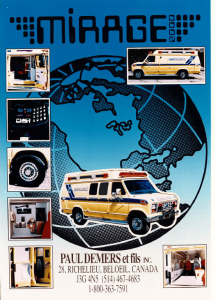
An original brochure promoting the Mirage CX series.
When Ford updated its ambulance chassis, we reworked our designs to match and pushed innovation even further. That effort led to the Mirage CX series, featuring an aerodynamic raised roof with integrated emergency lighting to improve handling and fuel efficiency. The Mirage CX became a defining platform, with more than 3,000 units delivered across Canada and the United States.
1994
Launching The Mystere Series
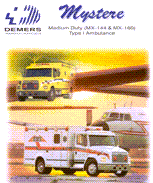
An original brochure promoting the Mystere series.
This platform marked our entry into the Type III market. We introduced new manufacturing methods, designing a fully aluminum care module built on a cutaway chassis.
1998
Releasing The LTB Series
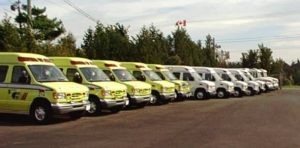
Examples of our LTB series.
We introduced a new Type II model – the LTB – and produced more than 600 units for the Quebec market.
1999
First Military Contract
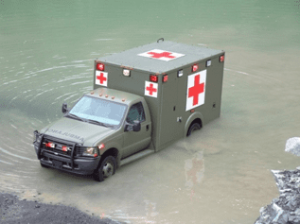
An ambulance produced for the defense contract.
Canada’s Department of National Defence and Armed Forces placed a major order for ambulances to supply battlefield medical operations. Our units were tested in critical conditions and proved their strength, performance, and reliability.
1999
10,000th Unit Delivered
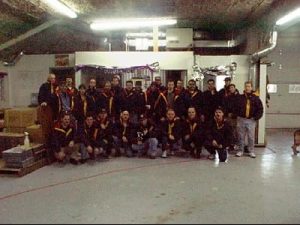
The team that worked at the facility at this time.
We reached a major milestone with the delivery of our 10,000th ambulance. Around the same time, we gained attention in the U.S. by delivering vehicles that exceeded the federal KKK-A-1822 ambulance specification.
1999
The New Millenium

The interior of an Millénium ML146 ambulance.
At the turn of the century, we introduced the Millénium ML146, an ambitious new model built with composite materials to address corrosion and paint durability. While production ultimately ended in 2007, the program delivered valuable engineering insights that strengthened our technical expertise and helped shape future ambulance innovations.
1999
New Production Facilities
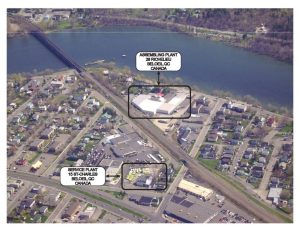
A layout of our facility locations in Beloeil.
We expanded our manufacturing capacity with the addition of a new facility on Saint-Charles street in Beloeil, adding 18,000 square feet of production space. Combined with expansions at our main site, this growth tripled our overall footprint to support continued demand.
2001
Partnership with Métalus

As we grew, we brought key suppliers with us, building long-term partnerships to support evolving vehicle designs. One of those partners was Métalus, whose collaboration deepened with the growth of our Type III models and helped strengthen our sheet metal capabilities over time.
2003
Engineering with Accountability
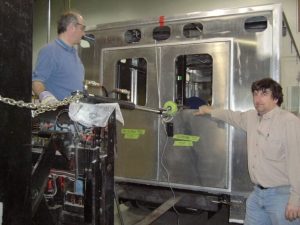
Members of the testing and certification team.
Safety and quality became central to how we build. In 2003, we established a dedicated testing and certification team to validate new vehicles and ensure every ambulance met or exceeded industry standards.
2004
Ownership Change

We were acquired by Novacap, a private equity firm focused on growing strong mid-sized companies. Recognized for our long-term potential, the business was positioned for increased investment, expansion, and continued innovation.
2005
Entry Into The U.S. Market
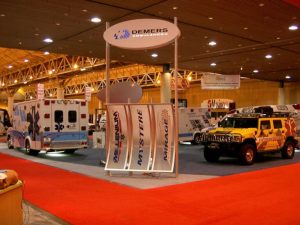
Our booth setup at JEMS circa 2005.
We made our debut in the United States at the JEMS Conference and Expo in New Orleans, showcasing our Type II and Type III ambulances as well as the Millénium model.
2005
Advancing Electrical Systems

A peek inside the electrical control panel of an ambulance.
An international contract launched our collaboration with PRAN to integrate multiplex electrical systems into our ambulances. These digital systems replaced traditional relay-based setups and laid the groundwork for continued innovation, including the development of advanced control platforms like the MMC.
2005
NERV: A Key U.S. Dealer
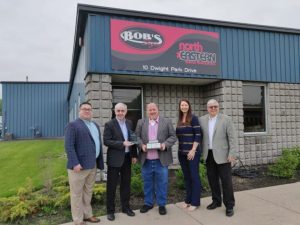
Bob Reilly of NERV with key members of our leadership team.
We signed a distribution agreement with North Eastern Rescue Vehicles (NERV) to serve customers across New York State. With more than 900 ambulances delivered, NERV remains our largest U.S. dealer to date.
2006
First FDIC International
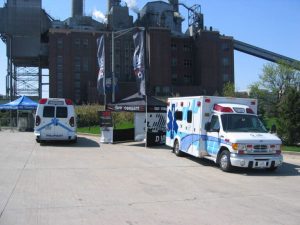
Some of our units on display at the show.
We attended FDIC International for the first time, the world’s largest trade show for fire and emergency services.
2007
Introducing The MX 144B
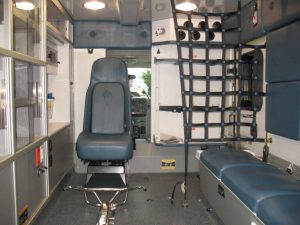
The interior of an MX 144B ambulance.
We introduced a new Type III ambulance with a 144-inch module, designed to succeed our earlier Type II platform and meet evolving requirements. More than 600 units of this model were produced for regional customers, reinforcing its role as a key step in our Type III lineup.
2007
PMB Partnership

As demand for metal components increased, we partnered with PMB, a family-owned metalworking company. Over time, the relationship grew into a trusted, long-term supplier partnership that supported our expanding production needs.
2007
Standardizing The MX 160A
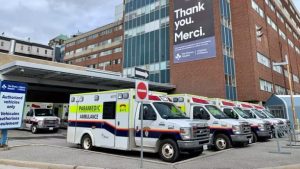
An MX 160A fleet outside of a hospital.
Until 2007, we offered multiple configurations of our 160-inch Type III ambulance. That year, we standardized the platform while continuing to accommodate the specific needs of EMS agencies, a model that would go on to see more than 1,600 units deployed over the next 14 years.
2008
Major U.S. Contract Secured

A Demers Type II ambulance for Superior Air-Ground Ambulance Service.
Superior Air-Ground Ambulance Service, a long-established EMS provider in Illinois, placed its first order with us. The company has remained a loyal customer ever since. Today, it employs more than 3,000 people and operates in five states.
2009
Introducing MobilityTrack

Our MobilityTrack seating system inside a module.
Improving crew safety while preserving the ability to deliver patient care became a critical focus. That effort led to the development of the MobilityTrack seating system, which allows controlled movement while remaining safely restrained and went on to set a new standard for ambulance seating
2010
A Milestone Year
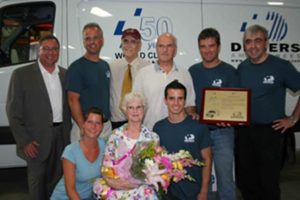
In the front row, Karel Brisette, Jeannine Demers, and Antoine Demers celebrate the milestone moment.
The delivery of our 15,000th ambulance coincided with the company’s 50th anniversary, marking a significant milestone in our history. The moment reflected decades of growth, family leadership, and continued commitment to building ambulances for the evolving needs of first responders.
2010
Releasing The Mirage EX Sprinter

Our Mirage EX Sprinter Type II model.
The Mirage EX Sprinter was recognized by EMS World as one of the year’s most important innovations for its advances in design and ergonomics. The model quickly gained nationwide interest, with more than 1,000 units produced to date.
2011
ECOSmart Innovation
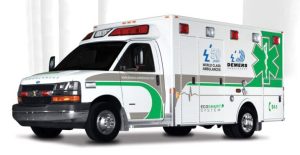
The Mystère MX 160 ECO model.
Launched in 2010 with the Mystère MX 160 ECO platform, our ECOSmart technology was recognized by EMS World for its positive impact on fleet operations and environmental performance. Designed to improve energy efficiency and reduce carbon footprint, the innovation reinforced our commitment to more sustainable ambulance solutions.
2011
The Trusted MXP 150
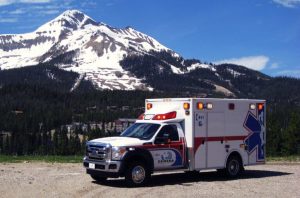
The MXP 150 Type I ambulance model.
Our MXP 150 earned the JEMS Innovative Product Award, recognizing a major step in our entry into the Type I ambulance market. Designed specifically for U.S. operations, this pickup-based platform required significant structural engineering and production planning, and its flush windows and high-performance HVAC system quickly gained attention across North America. To date, more than 1,000 MXP 150 units have been delivered.
2011
ProMedica Partnership
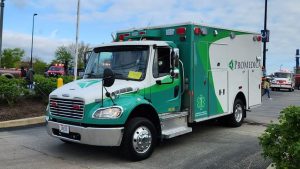
A Demers Freightliner ambulance produced for ProMedica.
We began our first collaboration with ProMedica, a major U.S. nonprofit healthcare organization, developing a specialized ambulance that was successfully integrated into its fleet. This partnership marked an important step in expanding our work with large U.S. healthcare systems.
2011
Releasing The Sprinter Medilite
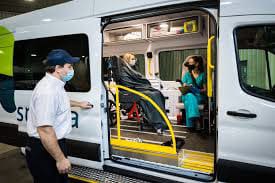
A look inside the Sprinter Medilite Type II ambulance.
In partnership with Dessercom, we developed the Sprinter Medilite to support non-emergency patient transport. Designed for efficiency and safety, the vehicle features a wheelchair or stretcher lift, secure anchoring points, medical cabinetry, and an integrated oxygen system.
2012
Launching The MX 152
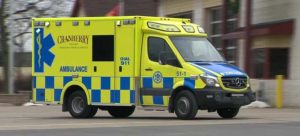
Our MX 152 Type III ambulance model.
In response to customers seeking a diesel-powered alternative following changes to Ford and GM offerings, we developed the MX 152 on the Mercedes-Benz chassis. While the model is no longer offered in the U.S., it continues to serve select regional fleets and reflects our ability to adapt platforms to evolving customer needs.
2012
Ironbridge Acquisition

We were acquired by Ironbridge, a private equity firm focused on investing in high-performing companies. With strong leadership, a solid foundation, and clear growth potential in the U.S., the acquisition marked a shift toward expanding our presence and focus in the American market.
2012
Dealer Network Expansion

Examples of our lineup from that period in time.
Between 2012 and 2016, we doubled our U.S. dealer network, expanding from 8 to 16 partners nationwide. This growth included established dealers such as Glick Fire Equipment Company, RedStorm Fire & Rescue Apparatus, Pomasl Fire Equipment, First Priority Group, and Bulldog Fire Apparatus. These longtime partners continue to represent our brand across the country.
2013
Debuting The MX 164

A promotional shot for the release of the MX 164.
Originally developed to provide more space and comfort for crews, the MX 164 quickly became our flagship model. To date, more than 2,500 units have been deployed across states and international markets.
2014
Plattsburgh Plant

The exterior of our Plattsburgh, NY plant.
To strengthen our U.S. presence, we opened a production facility in Plattsburgh, New York. This plant, dedicated to Type II ambulance production, allowed the Beloeil site to focus on Type I and III units. In five years, more than 350 vehicles were built there, until production was relocated to Ohio in 2019.
2014
Releasing The MXP 170
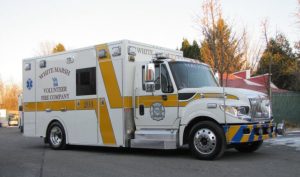
The exterior of an MXP 170 ambulance.
An extended version of the MXP 150, the MXP 170 was built on a heavier-duty chassis to meet the needs of certain U.S. customers.
2015
55th Anniversary
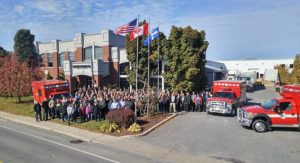
Employees outside our main facility for the celebration.
In honor of our 55th anniversary, we celebrated the delivery of our 18,000th ambulance. We also held an open house to mark our long success story with employees and their families.
2015
In Memory of Paul Demers
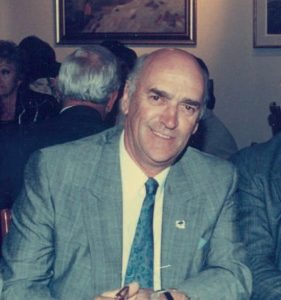
Paul Demers in his later years.
Paul Demers passed away in 2015 at the age of 84. Although he stepped away from the business in 2004, his presence never left. His values, vision, and devotion to the community remain deeply woven into our culture and identity.
2015
Introduing the MX 164B
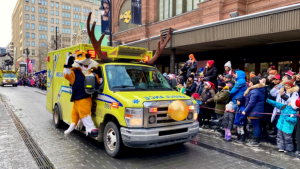
An MX 164 B on parade.
Building on the success of the MX 164, we continued to refine the platform with enhanced seating, ergonomic improvements, and added safety features. The model was further updated in 2023 with next-generation innovations, including the MMC control system.
2015
Launching the MX 151
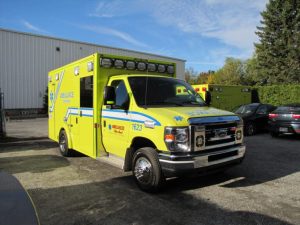
The exterior of an MX 151.
The MX 151, a compact Type III ambulance, was designed for Quebec ambulance companies operating out of smaller stations. Unexpectedly, the model also gained traction in the U.S. market.
2016
Releasing The Transit TSE
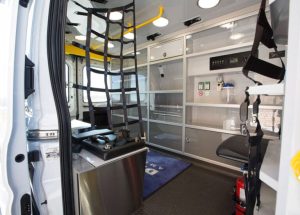
The interior of a Transit TSE Type II ambulance.
We developed the Transit TSE as a cost-effective, easy-to-service option for Ford dealers. The model was recognized as a Hot Product at EMS Today 2017 and has since seen more than 700 units sold across North America.
2016
A Special Mobile Stroke Unit

Our team and the custom mobile stroke unit designed for Alberta Health Services.
We took on the challenge of developing a highly specialized mobile stroke unit designed to bring hospital-level diagnostics and treatment directly to patients. Built around an onboard CT scanner and equipped with advanced stabilization, power, shielding, and telemedicine systems, the vehicle showcased what is possible when engineering, clinicians, and EMS professionals collaborate closely. The project earned the 2017 Innovation Award at EMS Today, recognizing its impact on the future of mobile emergency care.
2016
ClearSpring Acquisition

We were acquired by ClearSpring Capital Partners in partnership with Caisse de dépôt et placement du Québec and members of our executive team. The acquisition established a clear strategic objective: to scale the business and become the second-largest ambulance manufacturer in North America.
2018
Welcoming Braun

Demers’ President, Alain Brunelle, with Braun President, Kim Braun, after the acquisition announcement.
We took a major step in our North American growth strategy with the acquisition of Braun Industries, a family-owned company founded in 1972 in Van Wert, Ohio. Known for its high-end, custom-built ambulances, Braun shared our commitment to quality and craftsmanship, and the acquisition allowed us to shift Type II ambulance production to the Van Wert facility.
2018
Adding Crestline
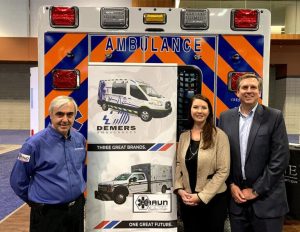
Alain Brunelle, Kim Braun, and Crestline Coach Ltd. President, Steve Hoffrogge.
Later that year, we acquired Crestline Coach Ltd., expanding our emergency vehicle portfolio and strengthening our North American footprint. The addition reinforced the Demers–Braun–Crestline group, improving financial strength and positioning the organization as a leading force shaping the future of the ambulance industry.
2019
Buying Carrosserie Carrey & Fils
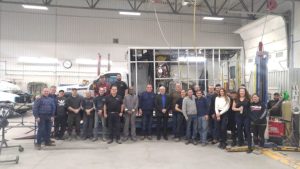
Team members at the remount and service center.
We brought in our long-time partner, Carrosserie Carrey & Fils, expanding our service and remount capabilities to better support fleets across North America.
2019
Releasing The MXP 153
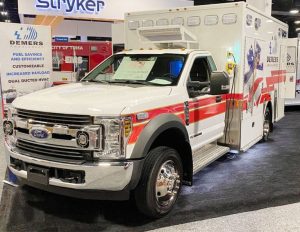
The MXP 153 at its tradeshow debut.
Developed in collaboration with Siddons-Martin Emergency Group, the MXP 153 Arctic Range Edition was designed for Texas and built to perform in extreme heat. The model would go on to see significant success.
2019
3 Brands, 1 Company

Steve Hoffrogge, Kim Braun, and Alain Brunelle at a Better Together rollout celebration.
We were intentional in choosing our partners, aligning with organizations that shared our culture, values, and commitment to serving customers. To bring the group together, we established a shared mission, vision, and set of values built around a simple belief: we are better together. By pooling resources, expertise, and capabilities, each brand has been able to stay focused on its strategic goals, even through periods of global uncertainty, proving the strength of a unified approach.
2020
60th Anniversary
Amid a global pandemic, we marked our 60th anniversary and delivered our 22,000th ambulance. The milestone signaled the start of a new decade focused on innovation.
2020
COVID-19: Resilience in Action
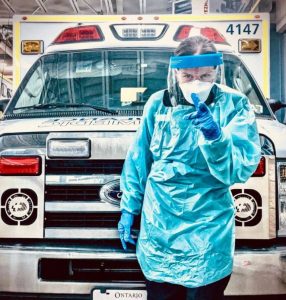
A promotional shot featuring an EMS provider in full PPE during the pandemic.
As the global pandemic disrupted industries worldwide, we remained focused on what mattered most. By continuing to build emergency vehicles during a public health crisis, we demonstrated the agility and resilience required to support first responders when communities needed them most.
2020
Launch of Customer Care
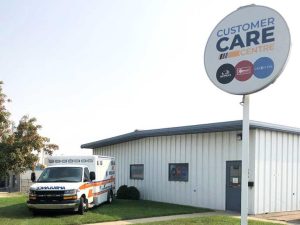
Our first dedicated after-sales service center in Saskatoon.
Despite the challenges of COVID, we made a deliberate investment in long-term customer support by establishing a dedicated Customer Care division. Built to support ambulances throughout their service life, Customer Care brought together factory-trained specialists, technical support, and parts expertise under one team, reinforcing our commitment to keeping fleets in service when reliability mattered most.
2021
Semiconductor Crisis
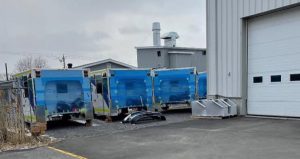
Examples of completed care modules awaiting chassis.
The pandemic had severe consequences for the global supply chain. The semiconductor crisis hit the automotive industry head-on, leaving manufacturers unable to complete chassis. As a result, thousands of uncompleted vehicles and chassis were stalled waiting for microchips. We were forced to slow operations, unable to deliver our ambulances. To retain staff, we modified our production approach: care modules continued to be built and were stored until the chassis arrived. It was another powerful demonstration of the team’s resilience and adaptability.
2021
The 1st Electric Ambulance

The unveiling of the eFX ambulance model at a special event.
In October 2021, we officially launched the world’s first fully electric ambulance project, marking a major milestone in emergency vehicle innovation. Initiated in 2016, the program was designed to deliver a true zero-emission mobile clinic while rethinking the ambulance care environment to better support paramedics and patients. Supported by Canadian public investment in vehicle electrification, the project reinforced our commitment to advancing sustainable, next-generation ambulance solutions.
2022
MMC System Introduced

An example of the MMC’s touchscreen controls.
Originally developed for our electric ambulance program, the MMC (Modular Multiplex Connected) system was later applied across conventional platforms, extending its benefits well beyond a single vehicle. The system delivers advanced control and optimized feature management while reducing wiring complexity, lowering vehicle weight, and simplifying maintenance. Designed for broad compatibility, MMC integrates with third-party software to help EMS providers adopt new technologies and improve service delivery.
2023
Presenting the FX Action™ Seat
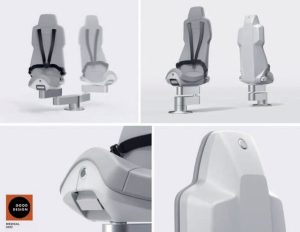
Renderings of our award-winning FX Action™ Seat.
We received the Good Design Award from The Chicago Athenaeum Museum for our FX Action™ Seat, recognizing excellence in ergonomics and industrial design. Developed in collaboration with Brio Innovation, the FX Action™ Seat was honored for its aesthetics, functionality, and technological innovation, reinforcing our leadership in ambulance interior design and mobile healthcare environments.
2024
1st eFX Completed
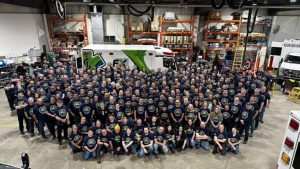
The team that helped manufacture the ambulance.
The first eFX ambulance was completed, marking the official production of the world’s first purpose-built, 100% electric ambulance. This milestone represented a major advancement for the industry and a proud moment for our team, bringing a bold vision for electric emergency vehicles into reality.
2024
Debuting the eFX in the U.S.
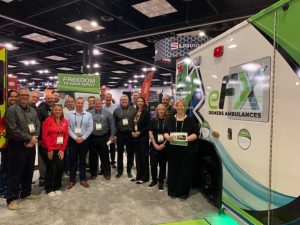
Members of the Demers’ team next to the eFX in the DBC booth at FDIC 2024.
The eFX made its U.S. debut at FDIC International, North America’s largest fire and emergency services event. The vehicle drew strong interest from attendees across the U.S. and around the world.
2024
25,000th Unit Delivered
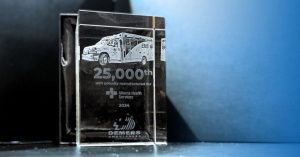
The award given to Alberta Health Services.
During a national EMS leadership summit, we presented an award to Alberta Health Services to commemorate the production of our 25,000th ambulance.
2025
65th Anniversary
In 2025, we celebrated our longevity throughout the year alongside our sister brand, Crestline, which marked its 50th anniversary. With shared roots and a family-driven mindset, both brands continued to carry those values forward while reinforcing a common commitment to delivering excellence for our customers.
2025
Joining J.B. Poindexter & Co., Inc.

We were acquired by JB Poindexter & Co., a leading North American manufacturing group, strengthening our ability to invest in innovation, engineering, and long-term growth while continuing to serve EMS professionals with the same focus and commitment.
2025
Introducing The MXP 170DFE

The exterior of the MXP 170DFE, which highlights the forward door placement.
We introduced the MXP 170DFE Type I ambulance with a door-forward design engineered to improve crew safety, workflow efficiency, and storage capacity for high-volume EMS and fire operations. Designed with first-responder input and advanced ergonomic features, the model reflects our ongoing commitment to addressing the evolving needs of U.S. fleets.
2025
Leading with the FXP 174
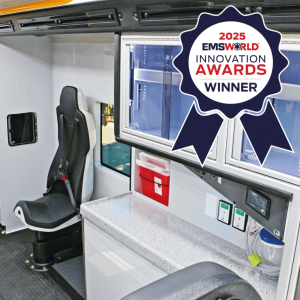
The interior of the FXP 174, featuring the FX Action™ Seat.
We debuted the all-new FXP 174 Type I ambulance at the 2025 EMS World Expo in Indianapolis, featuring industry-leading innovations like the exclusive FX Action™ Seats to enhance responder mobility, safety, and comfort. Recognized as a breakthrough advancement in Type I design, this model reinforces our focus on ergonomics and operational efficiency for U.S. EMS professionals. The model was awarded an EMS World Innovation Award.