


Browse By Type
Match Your Mission with the Right Ambulance Type
Find the Right Type for How You Work
Every ambulance we design supports how your crews work and deliver care in the field. Drawing on more than 25,000 units delivered to over 40 countries, we manufacture Type I, Type II, and Type III ambulances informed by real-world EMS feedback and proven engineering expertise.
This page helps you compare ambulance types to determine which Demers models best support your response environment, clinical workflows, and operational requirements. Because we build all three types, you benefit from consistent quality across your fleet, familiar layouts for your crews, and one manufacturer relationship as your service evolves.
Browse by Type
Use our quick lists below to browse ambulance models by type.



Type I Ambulances
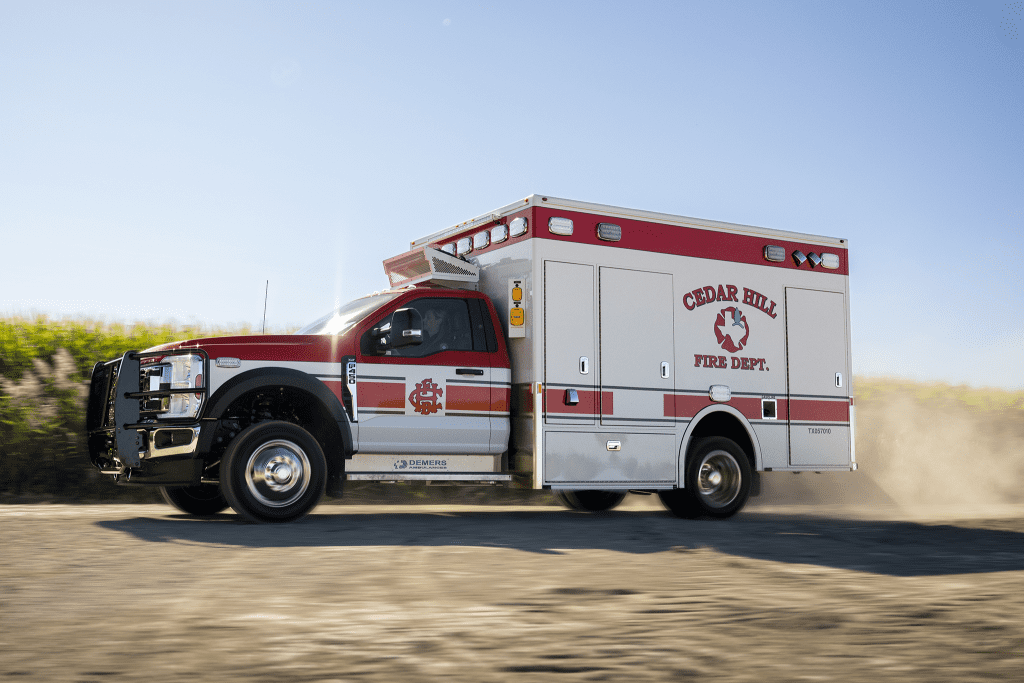
Demers Type I ambulances deliver maximum durability, payload capacity, and customization flexibility for advanced medical response. Designed for agencies operating in challenging conditions or carrying heavier equipment loads, Type I models provide superior structural strength, extended service life, and uncompromised performance when operational demands are highest.
Type I models include the MXP 150, MXP 170, MXP 170DFE, and FXP 174.
Type II Ambulances
Demers Type II ambulances provide the agility and fuel efficiency urban operations demand without sacrificing interior functionality. The compact chassis delivers superior maneuverability in congested areas while the engineered interior layout maximizes workspace for patient care and equipment storage—ideal for high-frequency interfacility transport and urban response where quick turnaround and parking accessibility matter.
Type II models include the Transit TSE and Transit TSS.
Demers Type II ambulances provide the agility and fuel efficiency urban operations demand without sacrificing interior functionality. The compact chassis delivers superior maneuverability in congested areas while the engineered interior layout maximizes workspace for patient care and equipment storage—ideal for high-frequency interfacility transport and urban response where quick turnaround and parking accessibility matter.
Type II models include the Transit TSE and Transit TSS.

Type III Ambulances
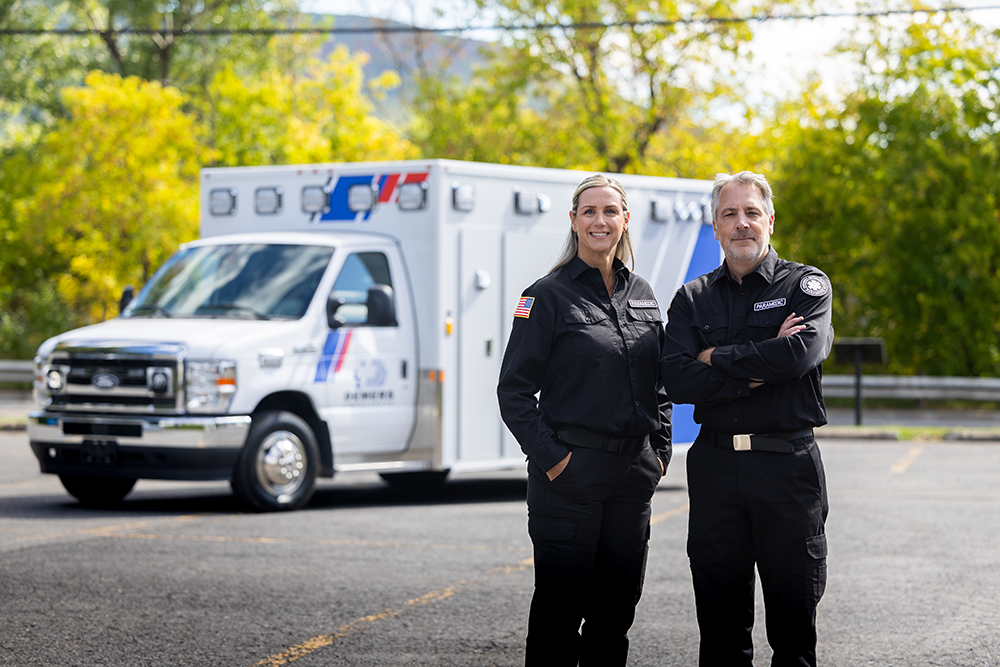
Demers Type III ambulances combine the ride quality of van-based platforms with the customization flexibility of modular construction. Cutaway chassis design delivers smoother handling and improved patient comfort, while the engineered interior supports efficient clinical workflows and crew ergonomics during high-call-volume operations. Type III models excel where frequent patient interaction, extended shift durations, and operational adaptability define daily service demands.
Choosing Between Ambulances Types
If you’re evaluating which ambulance type fits your operation, these answers address the key questions services ask when comparing Type I, Type II, and Type III platforms.
What is the difference between Type I, Type II, and
Type III ambulances?
Type III ambulances?
The primary differences between ambulance types are chassis platform, module construction, and the operational environments they’re engineered to support.
Type I ambulances use a truck chassis with a separate custom module mounted to the frame. Engineered for high-acuity response and advanced life support, Type I units deliver maximum payload capacity, interior space, and configuration flexibility for specialized equipment and critical-care protocols.
Type II ambulances are built on van-style chassis platforms like the Ford Transit. The compact footprint, superior fuel efficiency, and lower operating costs make them ideal for interfacility transport, hospital-based services, and non-emergency or BLS responses—particularly high-mileage operations where maneuverability and economy are priorities.
Type III ambulances combine elements of both designs: a cutaway van chassis with a separate modular body. This configuration provides more interior space and storage than Type II while maintaining better maneuverability and ride quality than Type I. Agencies choose Type III when they need added capability and workspace without moving to a full truck-based platform.
Selecting the right type depends on your response model, call volume patterns, patient acuity levels, and operational environment.
How do I choose the right ambulance type for my organization?
The right type depends on your operational profile. Start by analyzing your requirements: What’s your average call volume? Are transports primarily urban or rural? What’s your typical patient acuity? How much specialized equipment do you carry? The answers point toward the type that fits best. Your authorized Demers dealer partner reviews these factors with you and explains how each type performs in operations similar to yours, helping you identify the platform that delivers the capability you need without paying for capacity you won’t use.
What types of organizations typically choose a Type I ambulance?
Municipal EMS agencies, fire-based EMS services, and rural emergency providers commonly select Type I ambulances when operations require maximum payload capacity, structural durability, and configuration flexibility. Type I platforms support services operating in harsh climates, managing extended transport distances, running advanced life support protocols with specialized equipment, or responding in challenging terrain where vehicle durability is critical to operational reliability.
What types of organizations typically choose a Type II ambulance?
Private ambulance companies, hospital-based transport teams, and urban interfacility services typically select Type II ambulances for high-mileage, non-emergency operations where fuel economy, maneuverability, and lower capital costs matter most. Type II platforms excel in dense urban environments with tight parking constraints, frequent patient transfers between facilities, and BLS transport where the compact footprint and operating efficiency deliver measurable cost advantages over larger platforms.
What types of organizations typically choose a Type III ambulance?
High-volume municipal EMS agencies, county services, and urban 911 systems commonly select Type III ambulances when operations demand superior crew ergonomics, patient comfort during transport, and efficient clinical workflows across extended shift durations. The cutaway chassis with modular construction delivers better ride quality than Type I while providing more interior workspace and customization capability than Type II—making Type III ideal for services balancing high call volumes, ALS capabilities, and crew fatigue management without the payload demands that require full truck-based platforms.
What if I am not sure which ambulance type is right?
Uncertainty is common when evaluating types—especially for agencies purchasing their first ambulances or transitioning service models. Begin by analyzing whether your primary constraints are budget and efficiency (Type II), balanced capability and crew comfort (Type III), or maximum capacity and durability (Type I).
Your authorized Demers dealer partner assesses your call patterns, service geography, and equipment needs to confirm which type aligns with your operation, then helps narrow to specific models and configurations.
Does ambulance type impact overall cost?
Yes, but cost differences reflect capability differences. Type I units cost more upfront due to heavy-duty chassis and maximum customization capability—justified when operations require superior payload, durability, or specialized equipment integration. Type II units offer lower acquisition and operating costs for efficiency-focused operations. Type III balances moderate purchase price with crew ergonomics and clinical workspace. Choosing solely on the lowest cost can lead to operational compromises, while overbuying capability wastes resources. Your authorized Demers dealer partner analyzes your operational requirements and budget parameters to match type to actual needs.
Does ambulance type affect lead time?
Yes. Lead times vary by type due to chassis platform availability and module construction complexity. Type II ambulances typically have shorter lead times since they’re built on readily available van chassis with less complex module assembly. Type I and Type III lead times are generally comparable, influenced by truck and cutaway chassis production schedules and more extensive customization requirements.
Your authorized Demers dealer partner provides current lead time estimates for each type and can discuss procurement strategies—including remounting existing units—to maintain fleet availability while new ambulances are in production.