


"The Demers Difference"
Purpose-Built Ambulances, Designed Around You
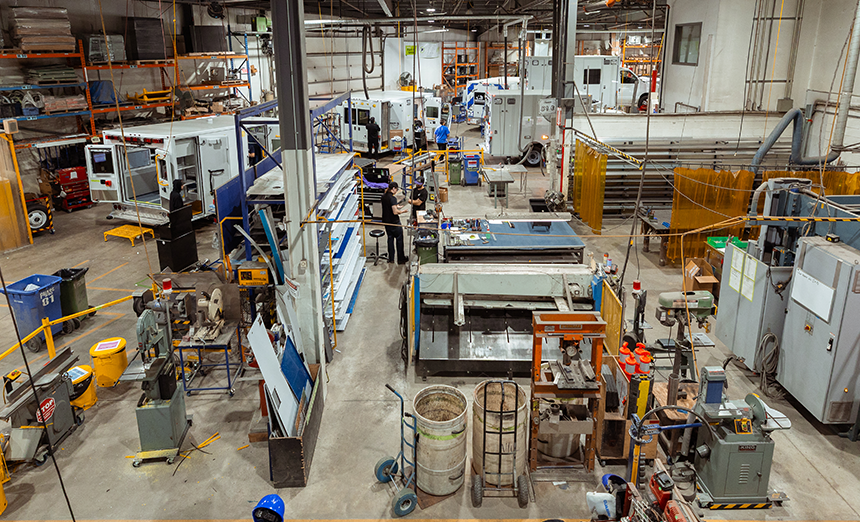
“The Demers Difference” is not a slogan; it is a measurable standard. It defines how we engineer, manufacture, test, and stand behind every ambulance long after it leaves the production line.
At Demers, everything we build begins with real-world EMS insight and ends with an ambulance engineered to support crew safety, patient care, and long-term operational reliability. Our approach is guided by a simple principle: never compromise. That means never compromising on safety, quality, engineering discipline, or the people who rely on our ambulances every shift.
We do not chase trends or add features that increase complexity without delivering value. Instead, we focus on thoughtful engineering, disciplined testing, and continuous improvement. Every design decision must serve a clear purpose and perform reliably in the field.
Engineered for You
“The Demers Difference” starts with designs that put EMS professionals first. Our ambulances are intentionally engineered for real-world EMS use, not adapted from automotive platforms or assembled around generic layouts.
Layouts, systems, and features are shaped by how you move, work, and deliver care during long shifts and high-stress calls. This focus on real workflows helps reduce fatigue, improve ergonomics, and create a safer, more intuitive patient compartment. By prioritizing the end user at every stage of design, we build ambulances that support how you actually work rather than forcing you to work around limitations.
Exclusive innovations
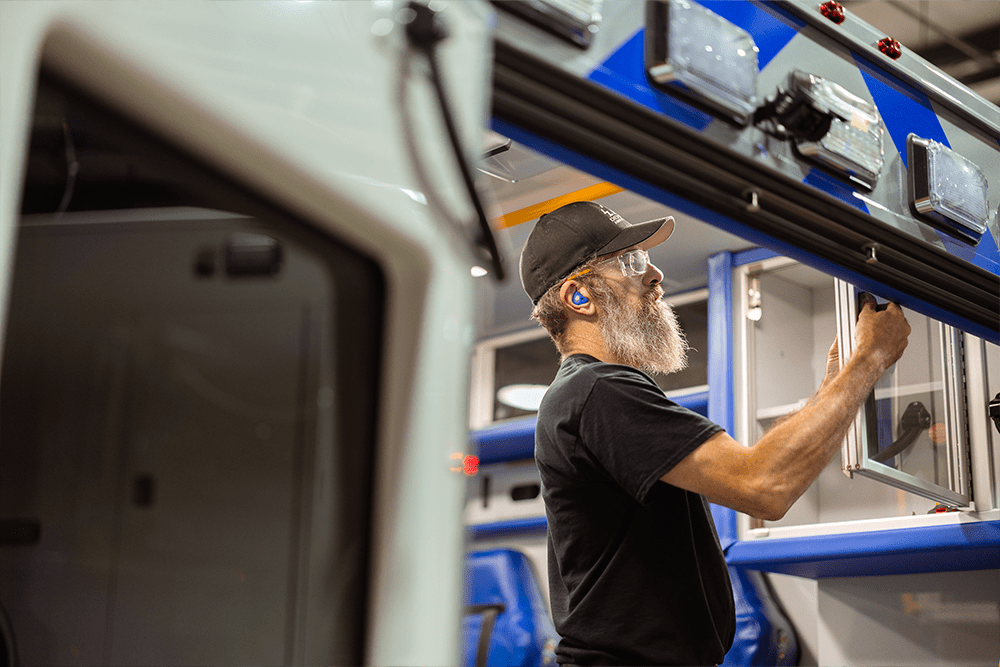
Our innovations are shaped by ongoing input from EMS professionals and refined through engineering-led validation. Field feedback is tested and validated, with proven improvements carried into future builds as standard whenever possible.
The result is innovation built directly into the ambulance to enhance safety, efficiency, and comfort in daily operations. From seating, climate control, and electrical architecture to cabinetry and fuel-saving technologies, these integrated systems reflect a disciplined, systems-focused approach to design. Together, they improve crew experience, support patient care, and deliver long-term value throughout the life of the ambulance.
Thought Leadership
We design with the future in mind because EMS operations continue to evolve. From introducing the first fully electric Type III ambulance to improving efficiency, durability, and lifecycle value, we focus on where ambulance design is headed.
Lightweight construction, modular systems, and service-friendly designs help reduce downtime, simplify maintenance, and support lower total cost of ownership. For departments planning long-term fleet strategy, this future-focused approach helps protect today’s investment while remaining adaptable to tomorrow’s operational needs.
We design with the future in mind because EMS operations continue to evolve. From introducing the first fully electric Type III ambulance to improving efficiency, durability, and lifecycle value, we focus on where ambulance design is headed.
Lightweight construction, modular systems, and service-friendly designs help reduce downtime, simplify maintenance, and support lower total cost of ownership. For departments planning long-term fleet strategy, this future-focused approach helps protect today’s investment while remaining adaptable to tomorrow’s operational needs.
Intentional Design
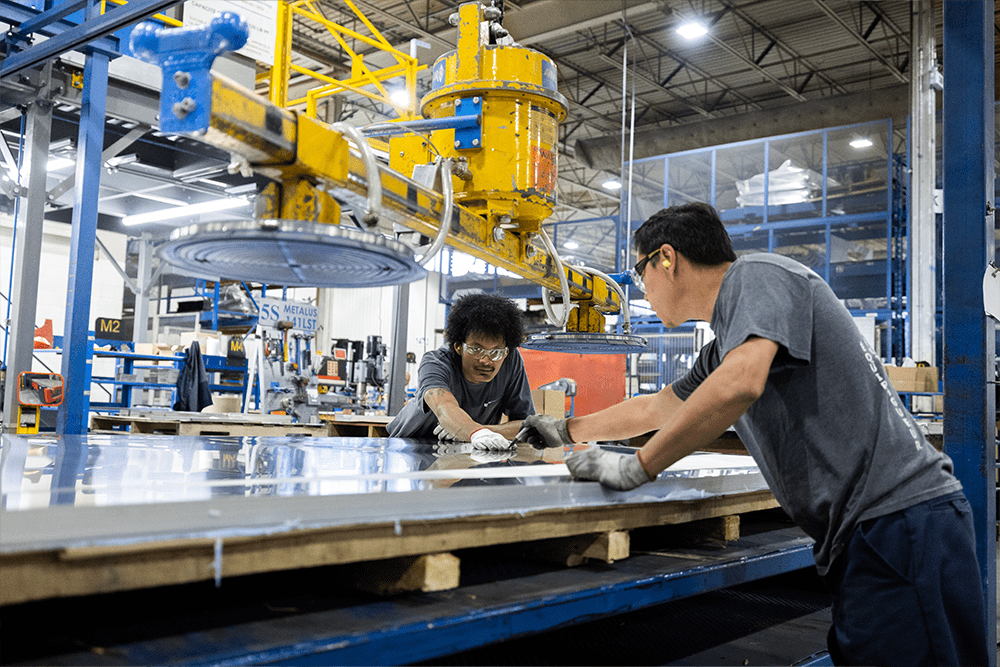
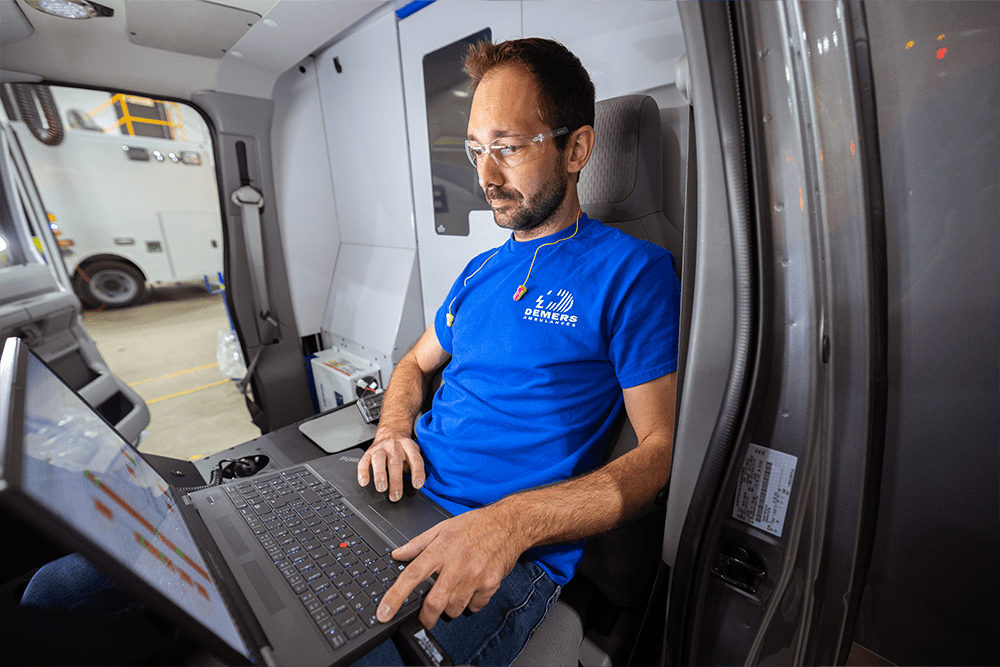
We approach ambulance manufacturing as an engineering discipline. Ambulance design is complex, and the stakes are too high to rely on assumptions or after-the-fact fixes.
We invest heavily in in-house engineering to evaluate how systems interact, how loads are managed, how components perform over time, and how design choices affect safety, serviceability, and durability. This depth of engineering ensures that what you experience in the field is not just innovative on paper, but proven, reliable, and built to withstand years of demanding use.
Our difference is not defined by a single feature. It is defined by how everything works together to support the people inside the ambulance and the missions they carry out every day.
Understanding “The Demers Difference”
The questions below address what truly sets us apart as an ambulance manufacturer. From how we design and test our vehicles to how we support the people who use them, these answers offer deeper insight into our approach and its implications for your crews, fleet, and long-term operations.
What sets Demers apart from other ambulance manufacturers?
We start with the people inside the ambulance. That has been our approach since 1960, when we began designing ambulances because the available options did not meet the real needs of service providers in the field. That same mindset still guides every decision we make today.
We know EMS work is demanding, unpredictable, and physically taxing, and the environment you work in matters more than most manufacturers acknowledge. That is why every design decision begins with a simple question: how does this help the crew do the job?
We pay attention to how you move during a call, how fatigue builds over a long shift, where strain and frustration show up, and what makes care harder than it needs to be. We design to reduce that burden. Our ambulances are shaped by real EMS feedback, refined through engineering, and built to protect, support, and respect the people who show up for others every day.
How are Demers ambulance designs driven by real EMS feedback?
We listen to the people who use our ambulances every day. Medics, EMTs, supervisors, and fleet managers tell us what slows them down, creates fatigue, raises safety concerns, and more. That feedback directly influences layouts, seating, storage, climate control, and electrical systems so the ambulance works the way you actually work in the field.
How does Demers manage build options while ensuring consistent performance?
We offer configuration options where they add value and standardize where consistency matters most. Core systems and layouts are engineered to perform reliably across our lineup, while options are integrated thoughtfully to support your operation, environment, and response needs.
This approach avoids unnecessary complexity, keeps systems familiar across your fleet, and simplifies maintenance and service over time. The result is an ambulance that fits how you operate without sacrificing reliability, uptime, or long-term durability.
Why does engineering matter so much in a Demers ambulance?
Engineering is where ideas become dependable, real-world solutions. We believe ambulance design requires dedicated engineering, given the vehicle’s complexity and the responsibilities it carries.
Our engineering team evaluates how systems interact, how components perform under load, and how design choices affect safety, serviceability, and durability over time. This ensures that every innovation is not only thoughtful but also proven, reliable, and ready for the realities of EMS work.
How does Demers support long-term durability and lifecycle value?
We design ambulances that last and perform consistently over time. Lightweight yet durable materials, modular and service-friendly systems, and intentional layouts help reduce downtime, simplify maintenance, and extend the useful life of each ambulance.
By focusing on proven, well-integrated systems, we help departments protect their investment throughout the entire service life of the vehicle.
What kind of partner is Demers after the ambulance is delivered?
We view every ambulance as the start of a long-term relationship. Support continues through our authorized dealer network, OEM parts availability, and knowledgeable technical teams who understand how our ambulances are built and used in the field.