Every year, EMS leaders are asked to do more with the same budget while keeping aging vehicles on the road. Remounts aren’t just a cost-saving measure. When planned well, they become a strategic lever that strengthens procurement cycles and frees resources to reinvest where it matters most.
The stackable savings of a remount
As a chassis ages, the impact on an EMS fleet becomes unavoidable: operating costs rise, unplanned downtime increases, and more units sit out of service during already tight deployment schedules. These pressures grow year after year, even when the care module remains structurally sound and fully functional. For EMS leaders managing tight budgets and service demands, this imbalance creates avoidable strain on both operations and capital planning.
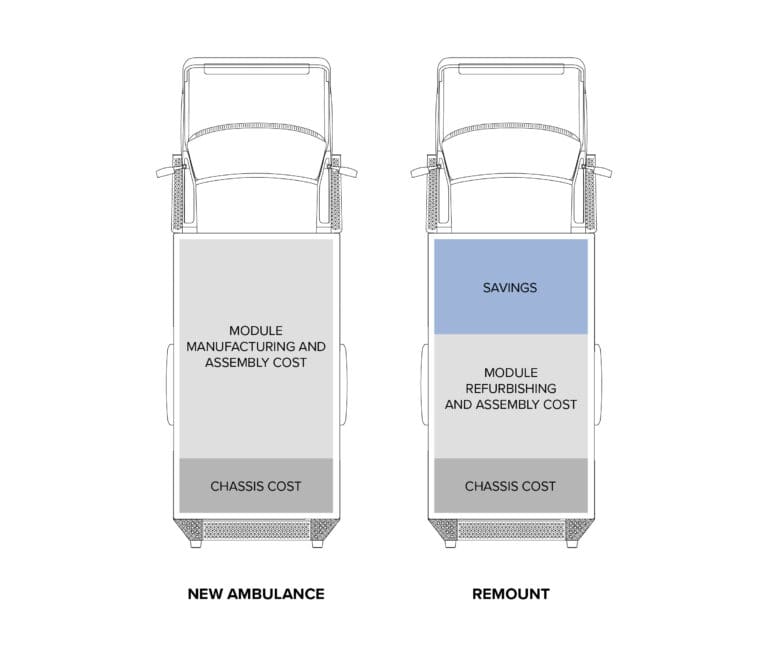
An ambulance remount directly addresses this challenge by replacing the component that fails first, the chassis, while retaining a module that continues to meet clinical and ergonomic expectations. With typical savings of $70,000 to $90,000 per remount, services reduce unnecessary spending tied to aging chassis, lower the risk of extended out-of-service periods, and keep more units available for frontline response.
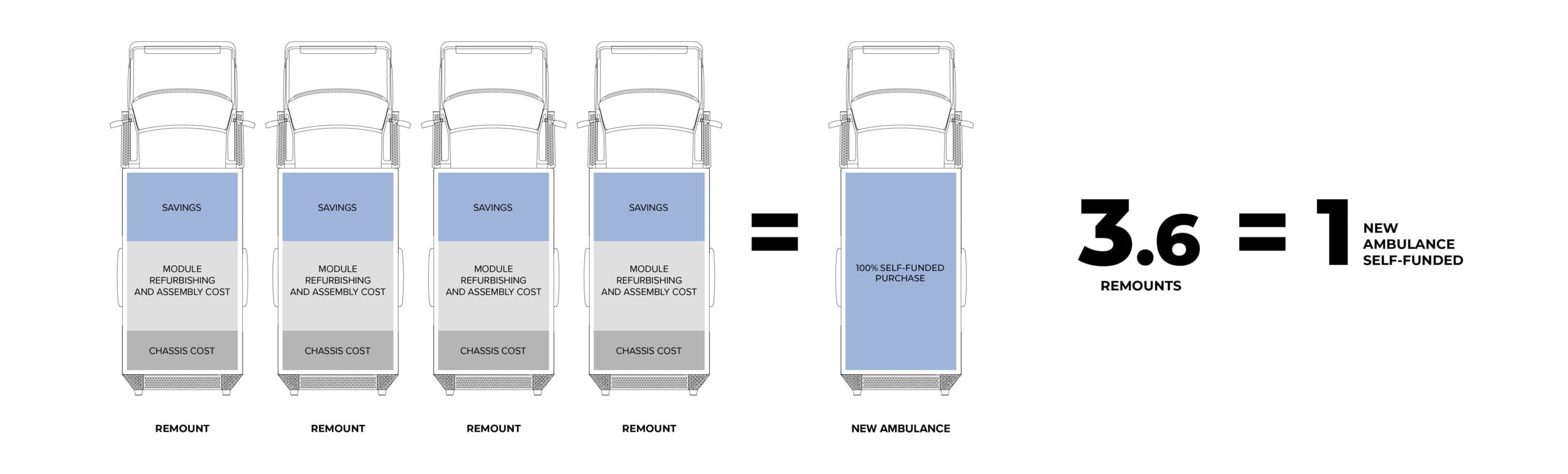
When integrated into a mixed-procurement model, these savings become even more meaningful. Stacking the value of three remounts can free enough budget to fund an additional new ambulance—without increasing overall capital allocation. This creates a more stable replacement cycle and a fleet strategy that aligns better with service demand and long-term sustainability.
What are the benefits of ambulance remounts?
- Opportunity to upgrade vehicles to ensure fleet consistency
A remount allows services to refresh elements of the care module such as lighting, ergonomic features, and storage layouts. Any upgrades beyond the standard remount scope are reviewed collaboratively between Demers and the service to confirm they are both technically appropriate and financially sound when compared with the cost of purchasing new. This ensures each investment aligns with operational realities and long-term fleet planning.
- Lower the total cost of ownership (TCO)
Demers’ build quality is designed for longevity, allowing the module to remain structurally sound well beyond the lifespan of the chassis. A remount extends the lifecycle of the original module at a significantly reduced capital cost. This raises the long-term value of the initial purchase and stabilizes the fleet’s total cost of ownership, an important advantage for services navigating multi-year budget pressures.
- Shorter lead times
Demers completes remounts in facilities dedicated to this work, separate from new-vehicle production. This structure improves planning and increases capacity across both lines, allowing remounts to move through the process more efficiently. Now, leadtime ranges from 6 to 10 months, depending on the centre. For EMS providers, this translates into faster return-to-service and steadier fleet availability over the course of the year.
- Sustainable procurement and alignment with public policies
Remounting reduces waste, limits raw material use, and minimizes the environmental footprint of fleet renewal. These measurable benefits support sustainability-focused procurement policies and value-based public purchasing frameworks.
Who should you trust to remout a Demers ambulance?
- Zero compromise on safety and compliance
Remounting an ambulance isn’t just a swap, it involves reconnecting a module to a new chassis, often built under different standards, wiring, and mechanical specifications. As the OEM, Demers fully understands the module’s design and how it integrates with a chassis safely and reliably. That expetise ensures remounts preserve structural integrity, proper system connectivity, and compliance with regulatory requirements, for both patients and paramedics safety..
- Get the Demers expertise throught the entire lifecycle or your ambulance
Before any work begins, Demers assesses the condition of the care module and reviews the scope of required work with your team. This ensures that remounting is the right investment, balancing cost against long-term fleet needs, rather than simply being the cheapest option. The result: a remount that meets your operational requirements without unnecessary spending.
- Ensure OEM warranty continuity for peace of mind
Only remounts completed directly by Demers qualify for warranty coverage. This ensures that every remounted ambulance adheres to our engineering standards and that workmanship is validated under our controlled processes. The warranty gives EMS services predictable lifecycle costs and confidence in long-term remount reliability.
Mixed-procurement strategy, a tool
Remounts give EMS leaders a reliable way to manage lifecycle costs, shorten timelines, and support sustainability commitments—all while maintaining a consistent, dependable fleet. Integrated thoughtfully into a mixed procurement strategy, they become a long-term asset for services balancing fiscal stewardship with frontline performance.

Hear what other EMS have to say
Remounts are gaining in popularity across Canada, read testimonials from services like Durham Paramedic Services, Dessercom, and Peel Paramedic Services.