Built on Canadian engineering expertise
For more than six decades, Demers has believed in the Type II ambulance platform and its important role within emergency medical services. The Type II ambulance did not appear overnight. It holds a meaningful place in the earliest days of emergency transportation and reflects how far the industry has come.
As the oldest ambulance manufacturer in North America, Demers is proud to have been part of this important history and has helped shape that evolution through continuous innovation, Canadian engineering expertise, and a deep understanding of paramedics’ operational realities. From the very beginning, we recognized the potential of the Type II platform and its ability to deliver agility, efficiency, and performance for Paramedic Services.
The emergence of the Type II ambulance
For over 65 years, our organization has been dedicated to designing and building vehicles that support emergency responders and the patients who depend on them. But emergency transportation did not always exist as we know it today.
Early patient transport relied on modified hearses and later Cadillac-based vehicles adapted to carry injured patients, which was a major step forward at the time. Still, these vehicles were designed primarily for transportation, with limited space, minimal equipment, and little ability to provide care on the road.
As emergency medicine evolved, paramedics needed safer, more functional environments that could support active patient care in motion. Ambulances were no longer expected to simply transport patients; they needed to become operational treatment spaces.
These changing operational realities would pave the way for the emergence of specialized ambulance platforms designed specifically for emergency medical care.


Recognizing this shift early, Demers embraced the emerging van-based platform and introduced this breakthrough vehicle in 1970. Known today as the Type II ambulance, the platform quickly gained recognition for its improved interior height, payload capacity, maneuverability, flexible layouts, and lower operating costs.
By investing early in the Type II platform and continuously refining its design over the decades, Demers helped shape the future of emergency medical transportation. The ambulance had evolved into a mobile treatment environment where care could begin immediately and continue safely en route.
From the 1970s through the early 1990s, Demers focused exclusively on manufacturing Type II ambulances, serving both the Quebec market and international customers. For decades, the Type II platform stood at the core of the company’s expertise and helped establish Demers as a recognized ambulance manufacturer in North America.
When Type I and III ambulances began joining the market in the mid-1990s, all platforms continued to coexist to answer different operational realities. Over the years, evolving safety standards influenced the production volumes of each model, but the Type II ambulance never disappeared. Paramedic Services continued to rely on its maneuverability, versatility, and operational efficiency for specific missions and environments.
Over the past 20 years alors, nearly one-third of all Demers ambulance deliveries have been Type II models.

Today, after decades of continuous presence in the field, the Type II ambulance is experiencing a strong resurgence across many Paramedic Services, reinforcing what Demers has believed from the very beginning: there is no one-size-fits-all solution in emergency response.
Still proudly designed in Quebec, Canada, the Demers Type II TS model continues to set the benchmark for reliability, functionality, and innovation across the industry.
This same commitment to supporting diverse operational needs continues today through hundreds of employees dedicated to designing, engineering, and manufacturing ambulances that help paramedics perform at their best across North America and around the world.
Our innovations, available today on most Type II ambulances
Decades of collaboration with paramedics and ambulance services have helped Demers continuously refine the Type II platform to better support modern operational realities. Today’s models integrate innovations focused on safety, ergonomics, functionality, and long-term operational efficiency.
- Increased storage capacity in newer models to better support paramedics and onboard equipment
- Expanded interior dimensions providing greater headroom and improved comfort for paramedics working in the patient compartment
- Redesigned roof structures creating a more spacious, ergonomic, and comfortable patient environment while meeting current safety standards
- Expanded configuration options to maximize usable interior space and operational flexibility
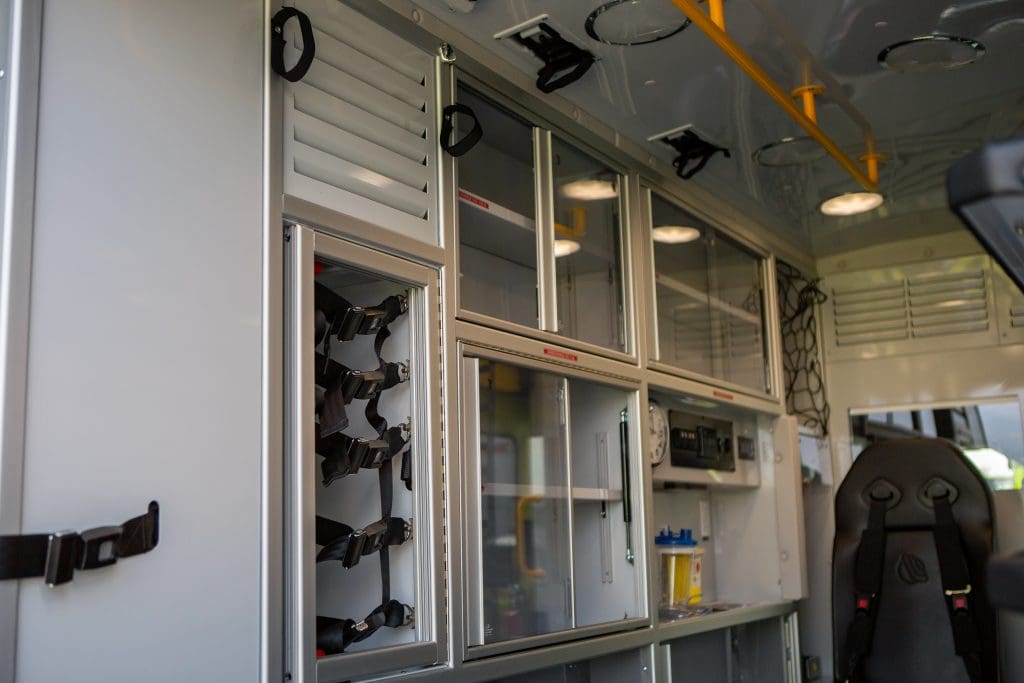
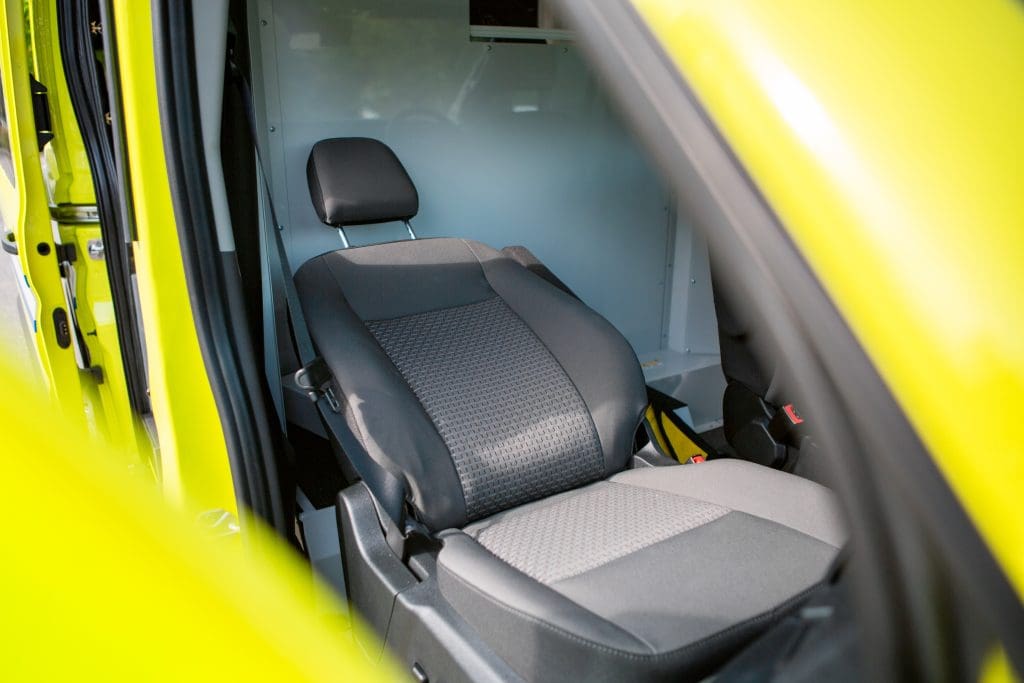
- A front cabin designed with comparable space to the patient compartment, including a reclining seat for added comfort
- Enhanced ergonomics developed around real paramedic workflows
- Continuous design improvements driven by field feedback and operational experience
A 10-month lead-time for Type II ambulances
Each generation of the Type II has been shaped by experience in the field. Feedback from ambulance services and paramedics has guided every improvement, every refinement, and every innovation. The partnerships built over the years have allowed us to strengthen the platform while preserving the efficiency and agility that make it so valuable in daily operations.
As more Paramedic Services continue recognizing the operational advantages of the Type II platform, demand has steadily increased across the market. Current production lead times are approximately 10 months, making early planning an important part of fleet readiness and replacement strategies.
To learn more about Demers Type II ambulances and discuss your fleet’s operational needs, contact our team today.