Foundation :
Paul Demers & Fils evolution (1960-2004)
1960
Paul Demers & Fils
Paul, Gustave’s grandson, was trained as an embalmer and funeral director. In 1960, he founded the company that would later become Demers Ambulances after realizing there was a need for vehicles to transport injured and sick patients to the hospital. A born entrepreneur, he also launched his ambulance service. But despite extensive research, he was unable to find any suppliers capable of building the vehicles he needed. So he decided to manufacture them himself, with the help of his close family and friends.
In the photo: Paul Demers in 1950, founder of Paul Demers & Fils.
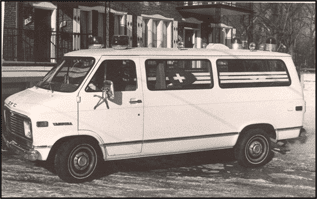
The first Demers Ambulance
It was a custom-built vehicle, featuring a cut and extended chassis and a raised roof to provide passengers with more space. At the time, ambulances were used solely for transport; the patient wasn’t receiving any care during transit. The paramedic profession did not yet exist; one only needed a valid driver’s license to drive an ambulance.
1967
Expansions
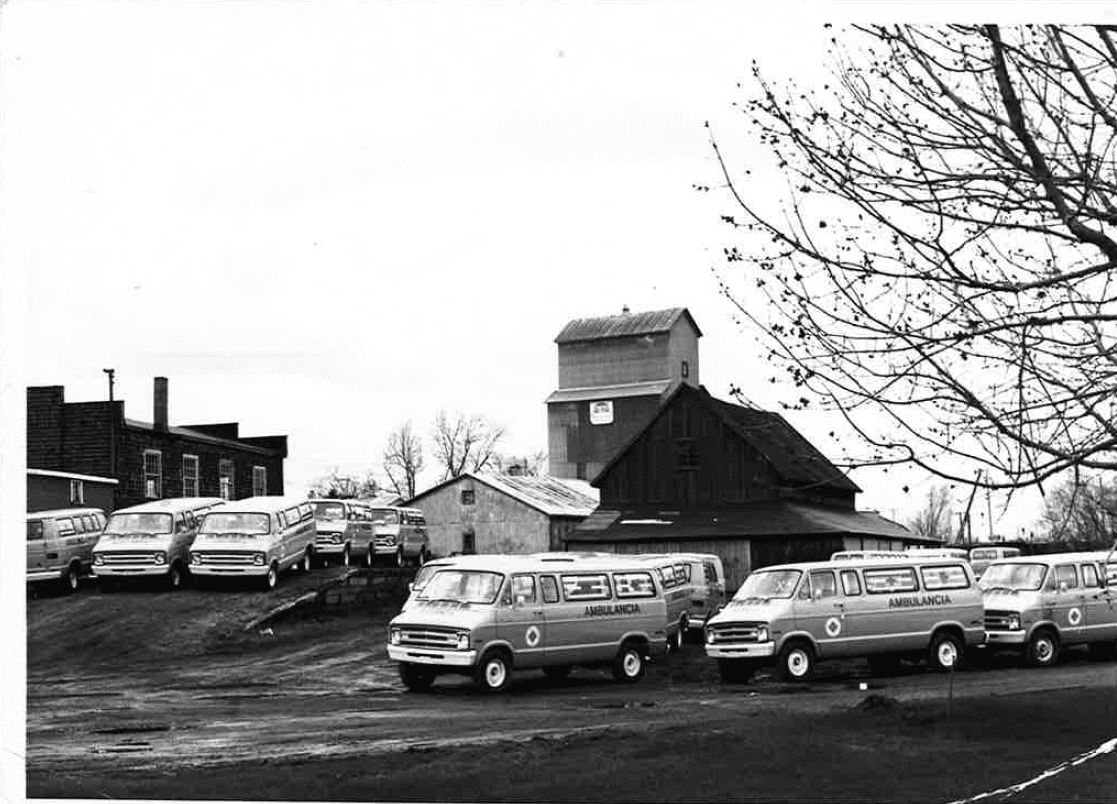
Buoyed by its growing success, the company moved three times before finally settling in 1976 at 28 Richelieu Street in Beloeil. Since then, successive teams have expanded the site to increase production capacity and meet rising market demand.
In the photo: our factory at 28 Richelieu Street in 1976.
1976
Rising international interest
Demers Ambulances’ expertise gained international attention. During a visit to Montreal, a representative from Venezuela’s Ministry of Health noticed the vehicles. A few months later, Demers received its first Latin American order: 200 ambulances. In 1978, the City of Alexandria in Egypt followed with an order of 100 units.
1979
First deliveries to the Middle East
The company’s growth and reputation extended again. Demers entered the Middle Eastern market through Iraq, which was then in active conflict with Iran. The company even shipped containers of tools and deployed mechanics to maintain the fleet of 550 new ambulances.
1984
Diversifying the product range
Demers started facing financial difficulties due to inconsistent order volumes. The company decided to diversify into limousine manufacturing, a trend very popular at the time. A return to its roots with hearses helped Demers enter the U.S. market, where it also sold imported Italian coffins to offer a full-service solution.
1987
Expansion in Western Canada
Demers signed an agreement with Crestline Coach Ltd. to distribute its ambulances. The deal rested on a long-standing relationship of trust between the companies that would endure for decades.
In the photo: the Crestline team with three ambulances built for Quebec in 1989. (photo credit: Peter Adsten)
1988
First order from Morocco
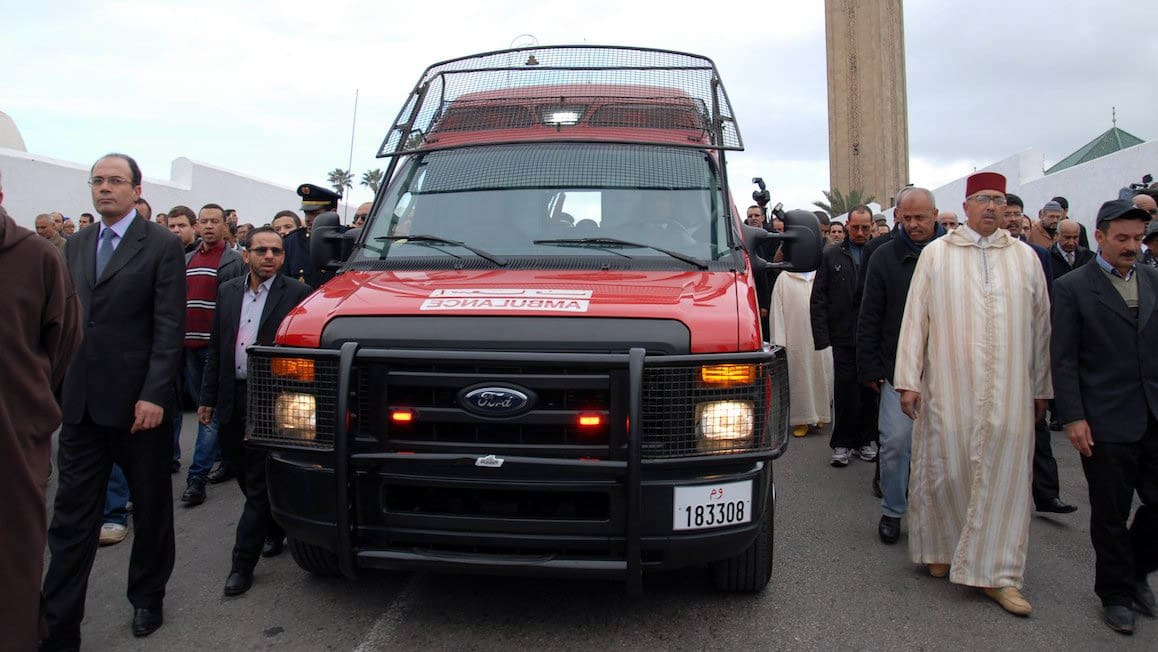
Morocco placed an order for 200 ambulances (150 yellow and 50 red units) specifically for the royal fleet. Over the years, Demers delivered more than 600 units to this country.
1990
Refocusing and leadership transition
Under financial pressure, Demers had to close its U.S. dealerships and liquidate its limousine and hearse operations. The company chose to focus exclusively on ambulances. Paul Demers handed over the reins to his four children: Sylvain, Guylaine, Yves, and Robin Demers. Today, Robin is still with the company.
1991
Establishing industry standards
At the time, ambulance manufacturing was largely unregulated, allowing unreliable makers into the market. Some vehicles were not built robust enough; accidents would destroy them, sometimes with tragic consequences. Demers began collaborating with the BNQ and the Ministry of Health to tighten manufacturing standards and raise expectations for quality and safety. That was the beginning of Demers’ commitment to advancing industry standards.
In the photo : a daily newspaper in Montreal reports on a major accident
Introduction of aluminum medical cabinetry
1992
Launch of the Mirage CX
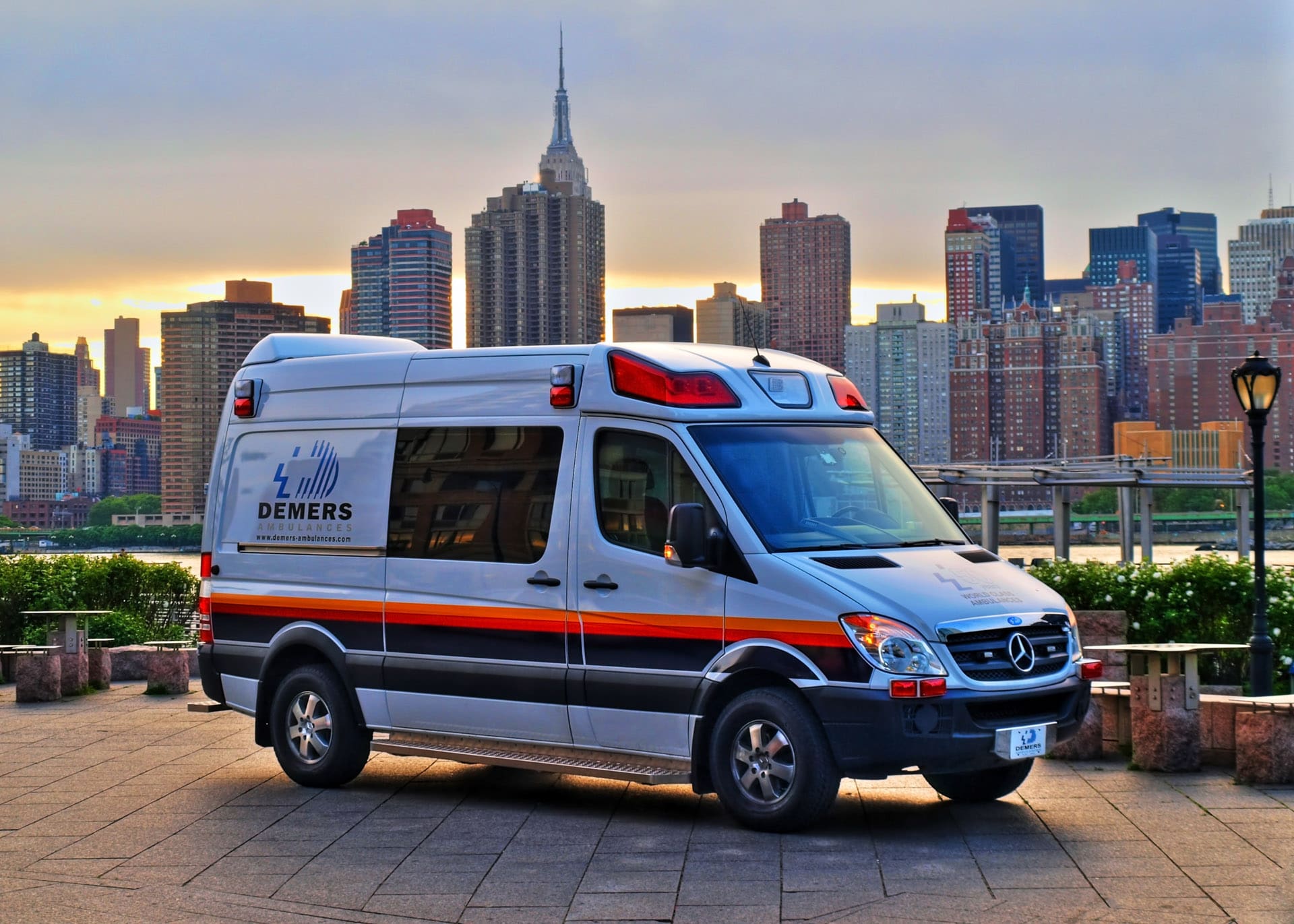
When Ford modified the base ambulance chassis, Demers had to adapt and rework its designs. The result was a series of innovations that would become central to the Demers identity. The Mirage CX series introduced an aerodynamic raised roof with integrated emergency lighting. This unique feature improved road handling and fuel efficiency. More than 3,000 Mirage units were sold in Canada and the U.S.
Strategic partnership in Western Canada
1995
Urgences-Santé, a major customer
Launch of the Millenium: a bold concept
To mark the turn of the millennium, Demers developed a revolutionary new model: the Millénium ML146. Built from composite materials, the unit aimed to eliminate the rust problems that damaged the ambulance’s paintwork. It was an ambitious project that required significant investment to develop a technically advanced, high-performing vehicle. But in the end, it proved too costly to maintain. Production stopped in 2007, yet Demers came away with valuable engineering know-how that would inform future innovations.
2001
Partnership with local supplier Métalus
Iraq renews its trust
Demers received another large order from Iraq, confirming the lasting value and performance of its vehicles in the field.
2003
New testing and certification team
Safety and quality had become key priorities for Demers. In 2003, the company established a dedicated team responsible for validating new vehicles and ensuring they met or exceeded industry standards.
First order from Magen David Adom
Demers became a supplier to Israel’s national EMS organization, Magen David Adom. To date, over 900 ambulances have been delivered to this client.
Development of Demers Ambulances (2004-2012)
2004
Agreement with Ireland and the United Kingdom
Demers signed an agreement with Wikler, a distributor of emergency vehicles in Ireland and the UK. Demers supplied 350 care modules in total in seven years.
2005
Entry into the U.S. market
Demers made its debut in the United States at the JEMS Conference and Expo in New Orleans, showcasing its Type II and Type III ambulances as well as the Millénium model.
Partnership with PRAN
A contract with Saudi Arabia marked the start of Demers’ collaboration with PRAN to integrate multiplex systems into its ambulances. These digital electrical systems replaced outdated relay-based setups. PRAN and Demers have continued to work together on advancing ambulance electrical systems, including the MMC.
First sales in Niger
Major contract in Morocco
Demers signed a large-scale agreement with Morocco. Nearly 500 bright red units would be delivered over three years.
2008
Major U.S. contract
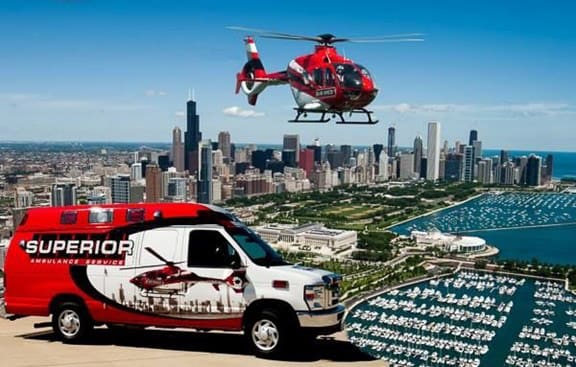
Superior Air-Ground Ambulance Service, a long-established EMS provider in Illinois, placed its first order with Demers. The company has remained a loyal customer ever since. Today, it employs more than 3,000 people and operates in five U.S. states.
Mobilitytrack
Demers Ambulances was approached by Chief Samson, head of Calgary EMS, following a serious accident that left a paramedic paraplegic. At the time, the paramedic had been standing during transport, a highly risky but necessary position to perform patient care. Demers accepted the challenge to develop a seating solution that would allow paramedics mobility while remaining safely restrained. This led to the creation of the MobilityTrack system, which has since become the standard in Canada.
Top Innovation Award at EMS World
The Mirage EX Sprinter was recognized by EMS World as one of the year’s most important innovations, honoured for its advances in design and ergonomics. Initially developed for Acadian Ambulance Service in Louisiana, which sought a Type II ambulance on a Mercedes chassis, the model quickly attracted a broad client base. To date, over 1,000 units have been produced.
2011
Top Innovation Award at EMS World
Launched in 2010 as part of the Mystère MX 160 ECO model, Demers’ ECOSmart technology was recognized by EMS World for its positive impact on fleet managers and the environment. Focused on energy performance and carbon footprint reduction, this innovation reinforced Demers’ commitment to more sustainable solutions.
JEMS Innovative Product Award
Demers was also awarded the JEMS Innovative Product Award for its new MXP 150 model. This recognition confirmed the company’s efforts to enter the Type I ambulance market. Designed specifically for the U.S., this pickup-based model required significant structural development and production planning. With flush windows and a high-performance HVAC system, it attracted attention across North America. Over 1,000 units have been delivered to date from the Beloeil facility.
Ongoing exports
Demers signed a contract with Morocco to deliver the MXP 130F model, consolidating its presence in the North African market and strengthening its international reach.
2012
Launch of the MX 152
In response to clients seeking a diesel option after the discontinuation of certain Ford and GM models, Demers developed the MX 152 on a Mercedes chassis. While no longer offered in the U.S., it remains a preferred option for some Ontario customers, such as those in Niagara.
Expansion into the United States (2012-2016)
2012
Acquisition by Ironbridge and new strategic direction
Ironbridge is a Toronto-based private equity firm investing exclusively in high-performing companies. Demers’ strong leadership, solid Canadian market position, and growth potential in the U.S. market appealed to Ironbridge, and the deal was completed. From that point on, the company turned its strategic focus toward the United States.
Expansion of the dealer network
Between 2012 and 2016, Demers doubled its number of U.S. dealers, expanding from eight to sixteen partners. New names included Glick Fire Equipment Company, Redstorm, Pomasi Fire Equipment, First Priority New Jersey, and Bulldog Fire Apparatus. These longstanding partners still proudly represent the Demers brand across the United States.
2013
Launch of the MX 164
Originally developed for Ontario paramedics seeking more space and comfort, the MX 164 quickly became Demers’ flagship model. Over 2,500 units have been deployed across provinces, states, and countries.
2014
Export to Vietnam
The MX 164 made its way to Southeast Asia, with a delivery to Vietnam, which would go on to become a recurring customer at Demers.
New plant in Plattsburgh, NY
To strengthen its U.S. presence, Demers opened a production facility in Plattsburgh, New York. This plant, dedicated to Type II ambulance production, allowed the Beloeil site to focus on Type I and III units. In five years, more than 350 vehicles were built there, until production was relocated to Ohio in 2019.
Launch of the MXP 170
An extended version of the MXP 150, the MXP 170 was built on heavier-duty chassis to meet the needs of certain U.S. customers.
Launch of the MX 164 B
Building on the success of the MX 164, Demers adapted the model to BNQ standards by adding a sliding seat and new ergonomic and safety features. The vehicle would later be redesigned in 2023 to include innovations like the MMC.
Launch of the MX 151
The MX 151, a compact Type III ambulance, was designed for Quebec ambulance companies operating out of smaller stations. Unexpectedly, the model also gained traction in the U.S. market.
2016
Launch of the Ford Transit
The Demers Transit TSE was developed as an affordable, easy-to-service option for Ford dealers. The model was recognized at EMS Today 2017 as a Hot Product. Since then, over 700 units have been sold across North America.
Special project for Alberta
Demers embarked on the ambitious development of a mobile stroke unit (MSU) for Alberta Health Services. Designed to treat stroke patients within a 200-kilometre radius of Edmonton, this mobile clinic was built around an onboard CT scanner. The custom vehicle featured a self-levelling hydraulic system, telemedicine monitors, quick-release locking mechanisms, an onboard generator, radiation-shielding panels, and integrated storage.
To complete this project within a year, Demers engineers worked closely with clients, physicians, and paramedics. The unit received the 2017 Innovation Award at EMS Today, one of North America’s largest EMS trade shows.
Better Together (2016-2019)
2016
A new chapter with ClearSpring
2018
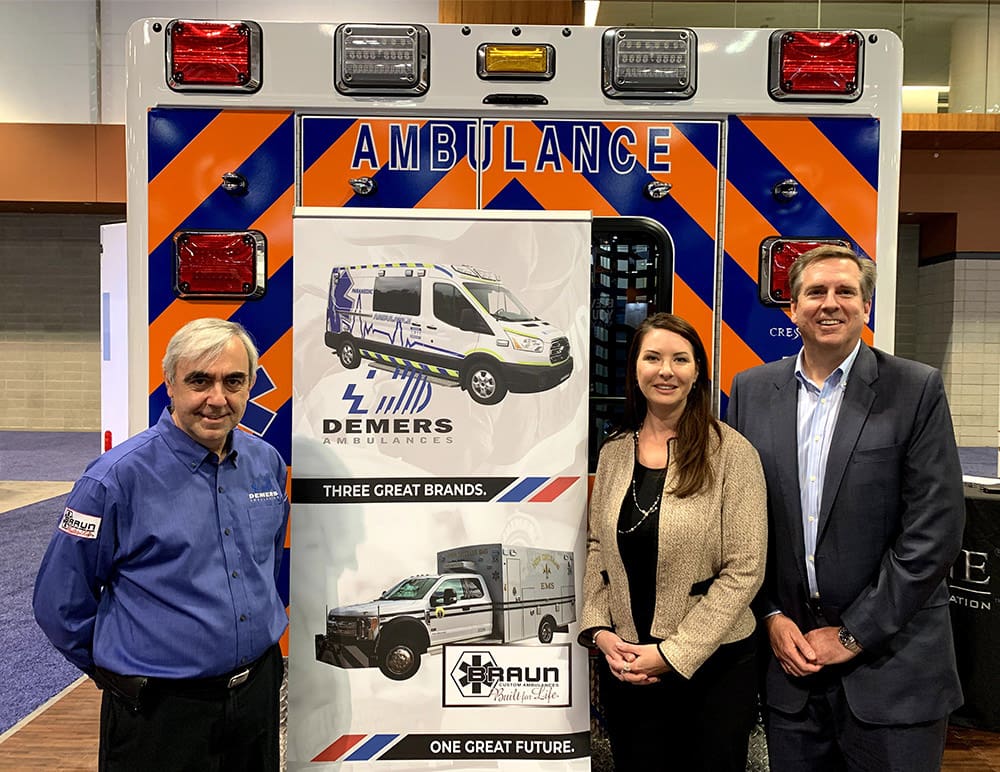
Acquisition of Braun Industries Inc.
Demers took the first major step in its North American growth strategy by acquiring Braun Industries, a family-owned company founded in 1972 in Van Wert, Ohio. Braun’s reputation for high-end, custom-built ambulances aligned perfectly with Demers’ values. Following the acquisition, Demers transferred production of its Type II ambulances to the Braun facility.
Acquisition of Crestline Coach Ltd.
Later that year, Demers acquired Crestline Coach Ltd., the other Canadian manufacturer of emergency vehicles and the country’s leading bus distributor. This consolidation strengthened the Demers-Braun-Crestline (DBC) group, enhancing its financial stability and positioning it as the industry shaping leader.
2019
Better Together
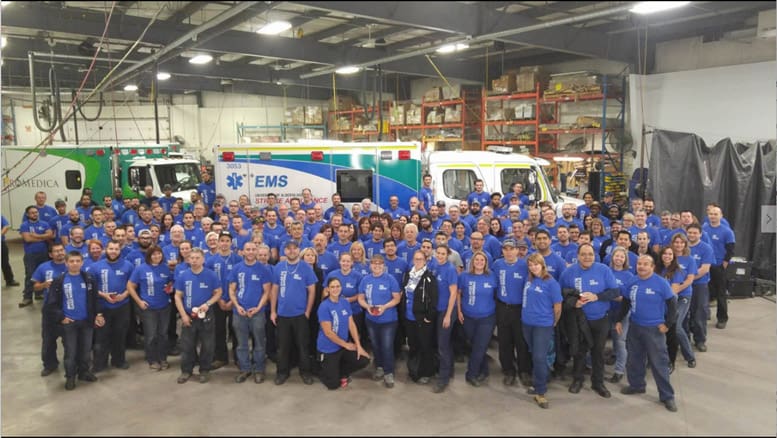
Demers did not choose its partners at random. Each entity brought strong alignment in culture, passion, and values. To strengthen unity and foster a shared sense of belonging, Demers worked to define a common mission, vision, and values across the group. This led to the concept of “Better Together”, a commitment to being better together, for both our people and our clients. Pooling resources, expertise, and capabilities has allowed every brand in the group to pursue its strategic goals, even in the face of global uncertainty. The difficult years that followed would prove just how powerful that unity could be.
Focus on innovation (2020–today)
2020
60th anniversary
Amid a global pandemic, Demers Ambulances marked its 60th anniversary and delivered its 22,000th ambulance in more than 40 countries. The new decade would be defined by innovation.
Launch of Customer Care
Despite the COVID context, Demers maintained its investment in infrastructure to support the maintenance and repair of ambulances in service. In 2020, the first dedicated after-sales service centre was inaugurated in Saskatoon, SK. A new team of factory-trained specialists, an inventory of parts ready for installation or shipment, and a dedicated technical support line laid the foundation for a Customer Service division that would continue to evolve in the years ahead.
2021
Semiconductor crisis
The pandemic had severe consequences for the global supply chain. The semiconductor crisis hit the automotive industry head-on, leaving manufacturers unable to complete chassis. As a result, thousands of uncompleted vehicles and chassis were stalled waiting for microchips. Demers was forced to slow operations, unable to deliver its ambulances. To retain staff, the company modified its production approach: care modules continued to be built and were stored until the chassis arrived. It was another powerful demonstration of the team’s resilience and adaptability.
Acquisition of Medix Specialty Vehicles
Demers continued its expansion by adding Medix to its portfolio. Founded in 2001, Medix had experienced strong growth, especially through large-scale exports to the Middle East. The company focused on manufacturing cost-effective ambulances, produced by 200 employees across five facilities in Elkhart, Indiana.
Launch of the eFX project, innovation flagship
In October, federal and provincial ministers and officials gathered at Demers headquarters in Beloeil to officially launch the world’s first 100% electric ambulance project. Initiated in 2016, this visionary effort sought to address environmental challenges and radically improve ambulance care spaces for paramedics and patients. A true zero-emission mobile clinic, the project is funded by the Quebec Ministry of Economy and Innovation through the MOBEL (Mobilizing Development of Specialized Electric Heavy Vehicles) and FECC (Electrification and Climate Change Fund) programs.
2022
Double Mercuriades award
Demers won two prestigious awards from the Fédération des Chambres de commerce du Québec. The company received the “Large Business of the Year” Mercure as well as the EDC Mercure for “International Market Development.” The trophies were passed from team to team across Demers like a Stanley Cup, strengthening pride and unity throughout the company.
Launch of the TXB
Demers introduced the TXB, a redesigned Type II ambulance built on a Ford Transit chassis. Designed for better handling and optimized performance, it was first tested in collaboration with Ambulances Demers, who helped refine its features. The TXB has since become a success in Quebec.
Launch of the next generation of Multiplex
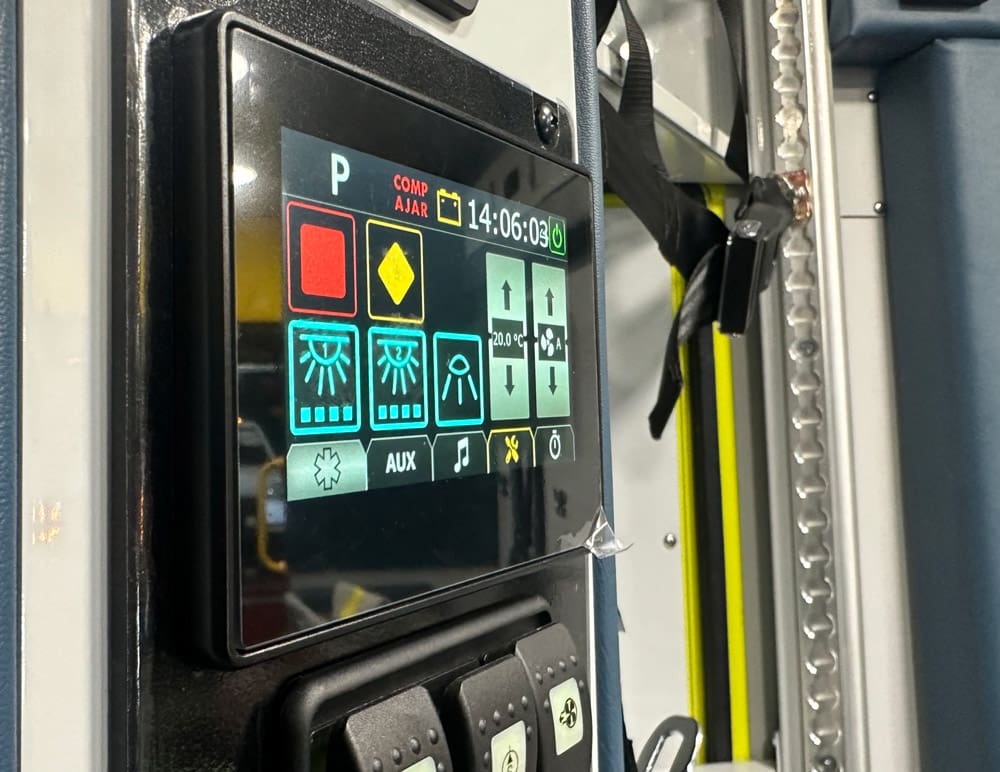
Originally developed as part of the electric ambulance project, the MMC (Modular Multiplex Connected) system was later deployed across conventional vehicles as well. This shows how niche innovations can benefit the entire industry. The MMC offers advanced control and optimized feature management. Additionally, its decentralized structure reduces wiring complexity, lightens the vehicle, and facilitates maintenance. With advanced functionality and broad compatibility, it integrates easily with third-party software, enabling EMS providers to leverage the latest technologies and enhance service delivery.
2023
Good Design Award
Demers received the Good Design Award from The Chicago Athenaeum Museum for its FX seat, a standout innovation. Created in collaboration with Brio Innovation, the FX seat exemplifies ergonomic excellence and advanced design in mobile healthcare. Recognized for aesthetics, function, and technological innovation, it reinforced Demers’ leadership in ambulance interior design.
Major delivery to Kuwait
Demers signed a high-profile contract with Kuwait, further expanding its presence in the Middle East.
eFX’s U.S. debut at FDIC
The eFX made its first public appearance in the United States at FDIC, North America’s largest fire and emergency services trade show. The vehicle drew significant attention from an international audience.
Electric ambulance showcased in Quebec City
In June, the Demers team unveiled the eFX electric ambulance at the Paramedic Chiefs of Canada Summit. Over three days, under the theme “Help Us Help You,” Demers hosted multiple demonstration sessions daily for paramedics visiting from across Canada, Europe, and Australia. The eFX even made a brief detour to the Military Drill Hall on Parliament Hill in Quebec City for Electric Vehicle Day, an event reserved for government staff and officials.
New Customer Care Service Centre in Eastern Canada
A new chapter in customer support: Demers relocated its Eastern Canada Customer Care Service Centre to a dedicated building in Mont-Saint-Hilaire, near Beloeil. This move increased the service shop’s capacity to keep pace with rising maintenance and repair needs, while also modernizing the warehouse to meet growing demand for replacement parts. New office space was added to better equip support teams and provide exceptional service in Eastern Canada.
Livraison du premier camion à Urgences-Santé
2025
65th anniversary celebrations
In 2025, Demers Ambulances is celebrating its longevity throughout the year, alongside its sister brand Crestline, which is marking its 50th anniversary. Both manufacturers, with similar roots, continue to uphold their family values across generations while reaffirming their shared commitment to excellence for their clients.
Innovative Manufacturer Award – Bombardier
Demers Ambulances was honoured for its commitment to innovation at the prestigious Mercuriades Gala, hosted by the Fédération des chambres de commerce du Québec (FCCQ). The team, a finalist in two categories including International Market Development – EDC, proudly received the Bombardier award for Innovative Manufacturer.
EMS World Innovation Award
Demers Ambulances’ latest Type I model, the FXP 174, was awarded at the 2025 EMS World Expo. Selected among a competitive field of nominees, the ambulance earned distinction for its innovative design, setting a new standard in improving paramedics’ mobility and workflow efficiency.